- 501 Orchard Road, #04-08 Wheelock Place, Singapore 238880
- (65) 6235 4429
- hello@vidaskinclinic.com
- (65) 9830 0597

TLDR: The Pigment Clearance Guide
Laser treatment is commonly discussed as a way to address pigmentation, but the actual biological process is often misunderstood. Pigment does not simply “disappear” after a laser session. Instead, pigmentation reduction is a multi-stage process involving physics, cellular biology, and the body’s own immune system.
This article breaks down how laser pigmentation treatment works — step by step — and why proper preparation and aftercare matter just as much as the laser itself.

At the core of laser pigmentation treatment is a principle known as Selective Photothermolysis.
This refers to the use of specific light wavelengths that are preferentially absorbed by melanin — the pigment responsible for brown or dark discolouration — while minimising absorption by surrounding skin structures.
In simpler terms:
This selectivity is why laser treatments can be adjusted for different pigmentation types, depths, and skin tones — though suitability must always be individually assessed.
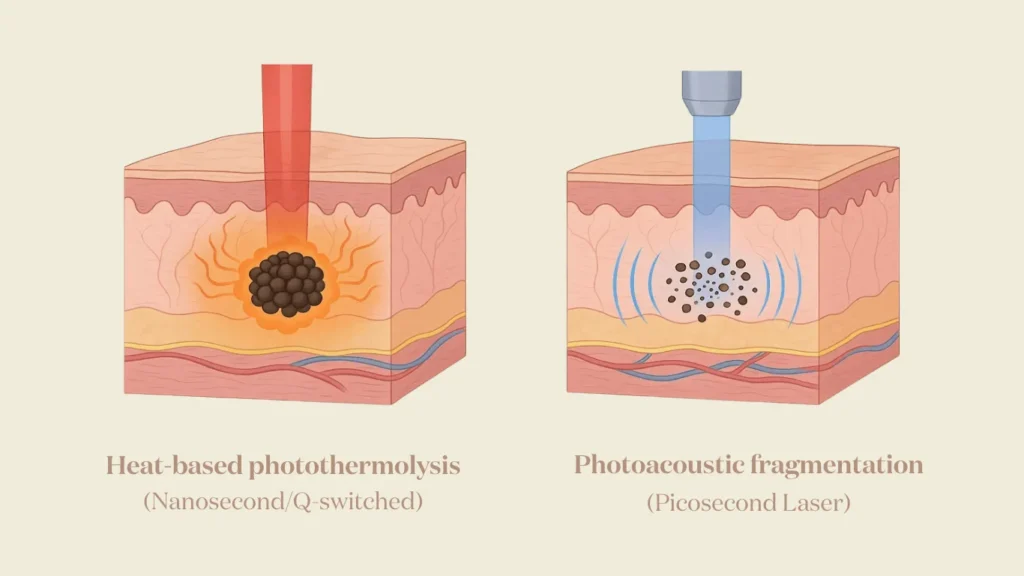
Once melanin absorbs laser energy, the next stage begins — often described as the “Shatter” Effect.
Modern pigmentation lasers use nanosecond or picosecond pulse durations. These pulses are so short that they deliver energy faster than the pigment can dissipate heat. Instead of thermal damage, the light is converted into acoustic (mechanical) energy.
This causes pigment clusters to:
This process explains why pigmentation may darken temporarily after treatment — the pigment has been fragmented, not removed yet.
One of the least discussed — yet most important — stages of pigmentation treatment happens after the laser session.
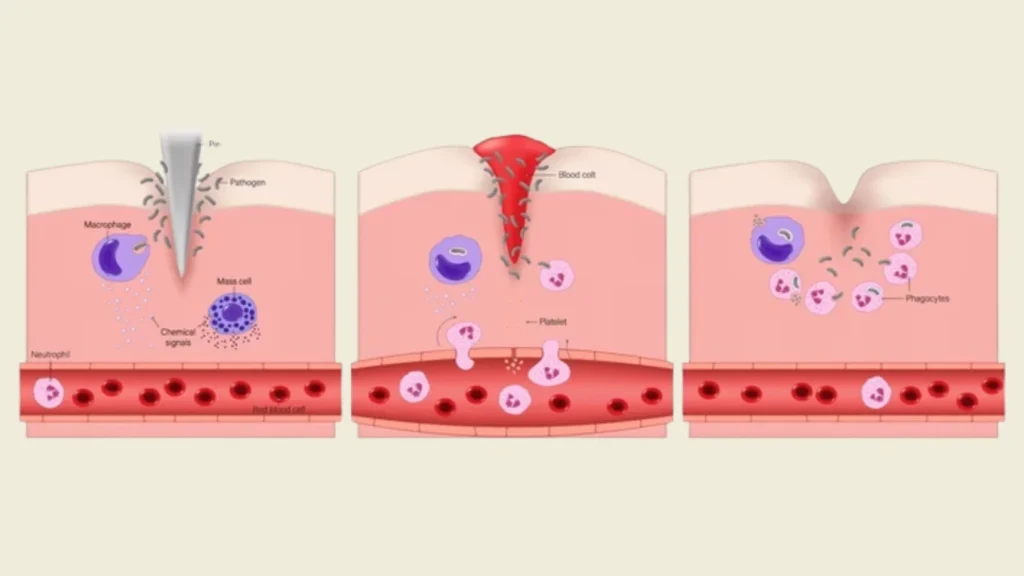
Once pigment particles are shattered:
This clearance process occurs gradually, typically over 4–6 weeks, which is why results from laser pigmentation treatment are not immediate and why spacing between sessions matters.
The laser initiates the process — the immune system completes it.
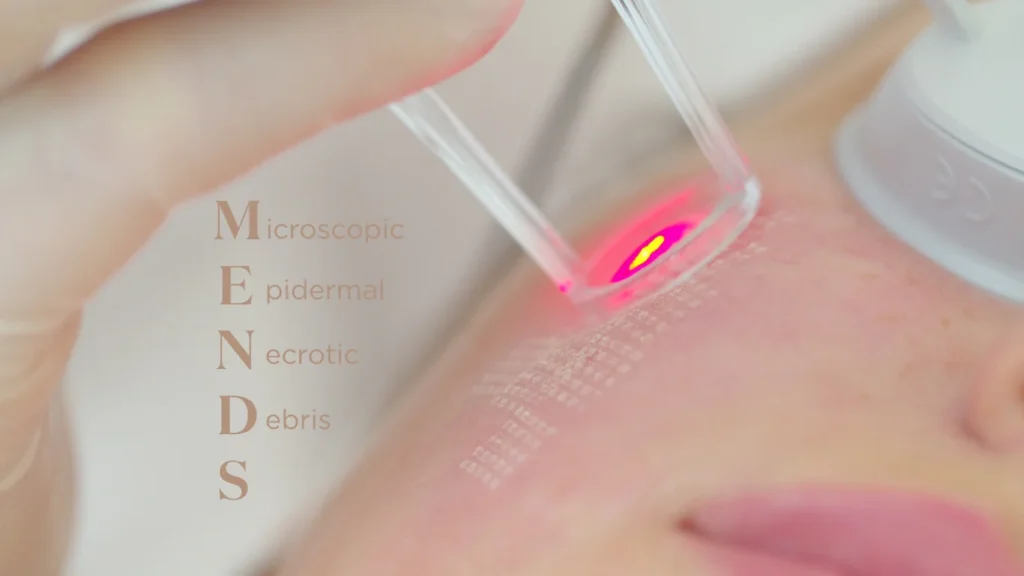
Some laser treatments, particularly those targeting superficial pigmentation, trigger what is known as the MENDS Phase — short for Microscopic Epidermal Necrotic Debris.
During this phase:
This is a controlled skin response, not scabbing or wounding. Picking or exfoliating prematurely can interfere with the skin’s recovery and should be avoided unless advised otherwise.
Pigmentation is not just a surface issue — it is regulated by melanocytes, which can become reactive after heat or inflammation.
Preconditioning the skin helps reduce this reactivity.
Using tyrosinase inhibitors — such as tranexamic acid — for around two weeks before laser treatment may help:
This step is particularly relevant for conditions like melasma or post-inflammatory hyperpigmentation, where pigment cells are more easily triggered.
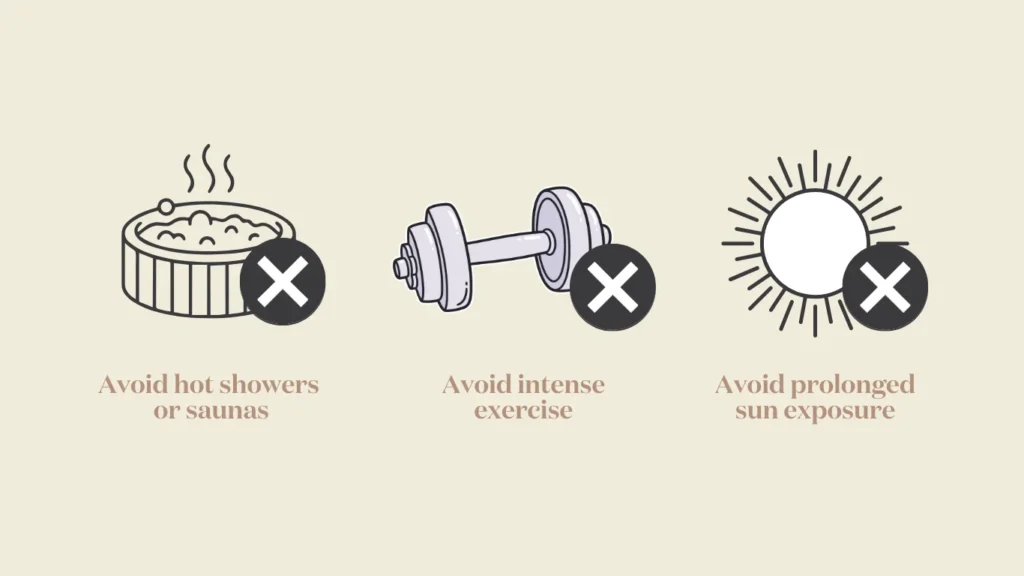
After laser treatment, the skin enters a sensitive thermal state. Excess heat during this window can stimulate melanocytes again — a phenomenon sometimes referred to as rebound pigmentation.
Maintaining post-care cold chains for the first 48 hours helps by:
This includes avoiding:
Cooling, gentle skincare, and strict sun protection are commonly advised during this phase.
Laser treatment for pigmentation is not a one-step solution. It involves:
This is why treatment plans are often spaced out and combined with skincare, lifestyle guidance, and follow-up assessments.
Understanding the biology behind laser pigmentation treatment helps set realistic expectations and highlights why preparation, technique, and aftercare all matter.
At VIDASKIN, pigmentation is assessed based on skin tone, pigment depth, treatment history, and lifestyle factors — allowing treatment approaches to be tailored appropriately without a one-size-fits-all mindset.