- 501 Orchard Road, #04-08 Wheelock Place, Singapore 238880
- (65) 6235 4429
- hello@vidaskinclinic.com
- (65) 9830 0597

When patients think about aesthetic treatments, they often focus on one solution at a time, such as filler for volume loss or laser for pigmentation. But in reality, skin quality often matters more than any single treatment because it affects how healthy, resilient, smooth, and radiant the skin looks overall.
This is why the best results rarely come from chasing one concern in isolation. A face can have good structure but still look tired if the skin is dull, dehydrated, uneven, or lacking firmness. On the other hand, strong skin quality can make the entire face look fresher, healthier, and more refined even before any major contouring work is done.

Skin quality is a broad term that describes how the skin looks, feels, and functions. It includes texture, tone evenness, glow or luminosity, hydration, firmness, elasticity, and the skin’s ability to reflect light healthily.
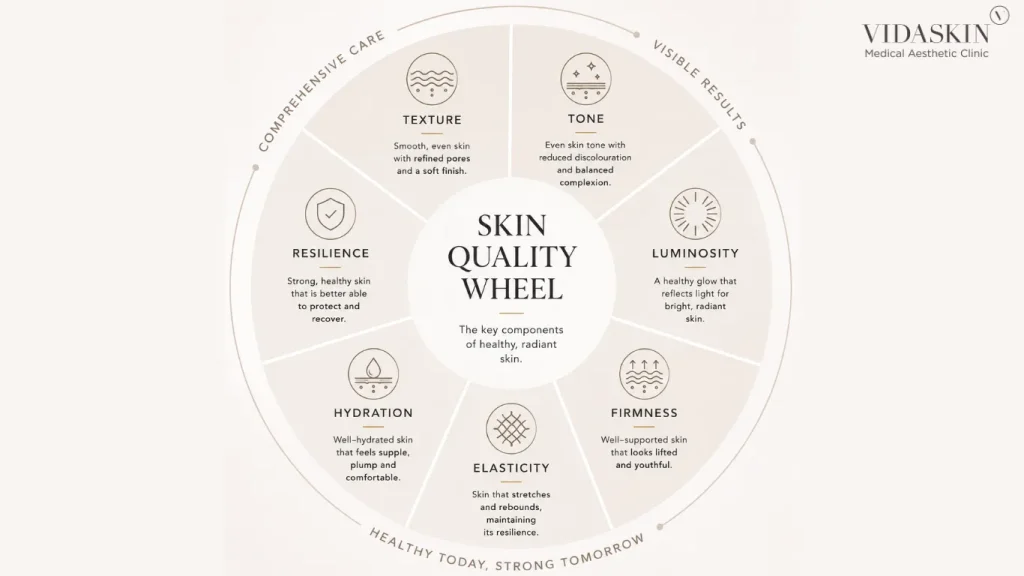
Texture refers to how smooth or refined the skin surface appears. Fine lines, roughness, enlarged pores, acne scarring, and uneven surface changes can all reduce the appearance of good skin quality.
Tone relates to how even the skin colour looks across the face. Pigmentation, redness, sallowness, and post-inflammatory marks can make the complexion appear less balanced, while luminosity describes the healthy light reflection that gives skin a fresher and more rested appearance.
Firmness and elasticity describe how well the skin resists sagging and bounces back when moved. These qualities depend heavily on collagen, elastin, hydration, and the condition of the dermal support network.
As collagen support gradually declines with age, the skin can start to look thinner, looser, and less resilient. This is one reason why the idea of collagen banking has become more relevant in preventive aesthetic care.
The face is made up of several layers, and each one influences ageing differently. Bone, fat pads, ligaments, fascia, muscle, and skin all contribute to how the face looks over time.
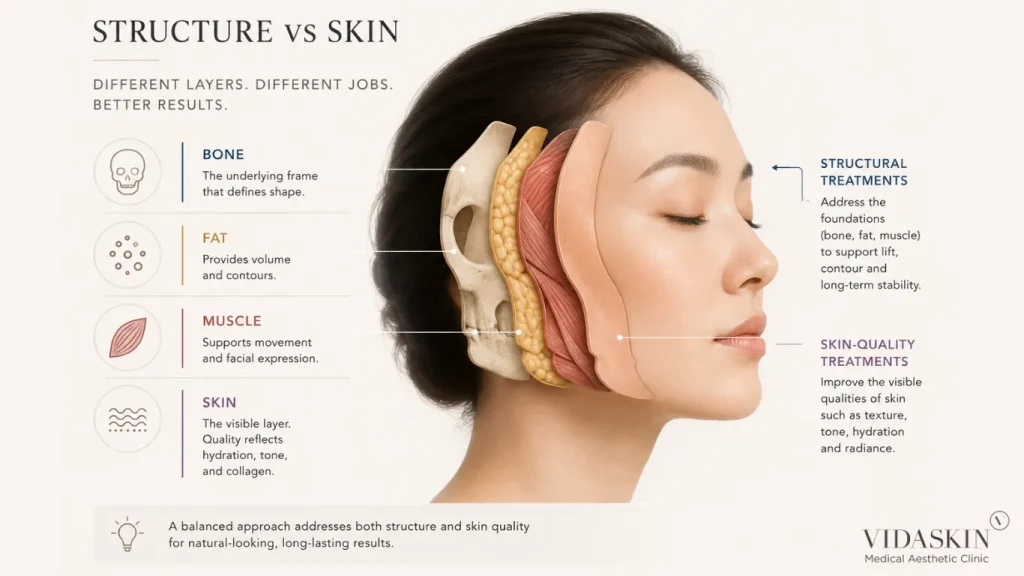
Structural treatments are designed to support the deeper framework of the face. These may include dermal fillers for true volume loss, collagen stimulators, and lifting or tightening treatments that target deeper support layers.
These treatments can improve contour, projection, and support, but they do not automatically correct dullness, dehydration, poor texture, or a damaged skin barrier. This is why deeper support alone does not always translate into a truly youthful appearance.
Skin-focused treatments work more on skin texture, hydration, elasticity, barrier quality, and dermal health. These may include skin boosters, polynucleotide treatments, collagen stimulators, medical-grade skincare, peels, and suitable laser treatments.
These approaches are often less about changing shape and more about improving the skin’s condition. Better skin quality can enhance light reflection, improve softness, and make the face look healthier in a subtle but meaningful way.
The same filler or laser can look very different depending on the baseline quality of the skin. Well-hydrated, resilient skin usually reflects light better, heals more efficiently and supports a smoother-looking result.
In contrast, thin, dry or inflamed skin may show texture, creasing, or recovery issues more easily. This is one reason many modern aesthetic plans focus on skin quality first, then add structural support only where needed.
Rather than waiting for major laxity or skin decline, many clinics now talk about collagen banking. This refers to supporting collagen production early and consistently so that the skin remains stronger and more resilient over time.
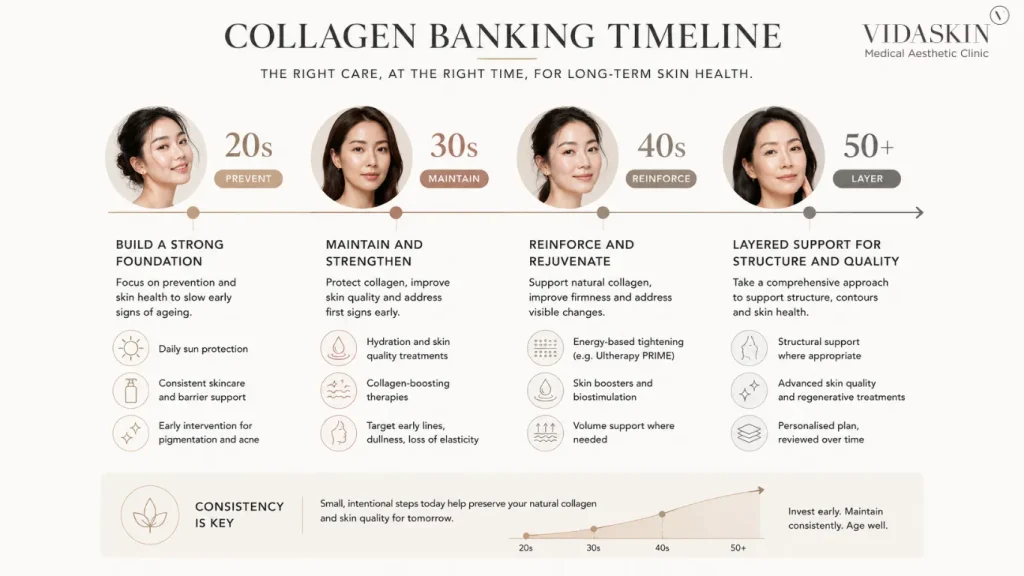
Collagen banking is the idea of preserving and stimulating collagen before obvious ageing becomes severe. Instead of waiting for deep wrinkles or major sagging, the goal is to build and maintain a healthier dermal foundation over the years.
This does not mean over-treating young skin. It means taking a measured approach to prevention, using appropriate treatments and intervals to support a gentler ageing curve.
At VIDASKIN, collagen support is framed as part of a broader doctor-led strategy rather than a one-off trend. Treatments such as PDLLA collagen stimulators, hydration-focused injectables, and layer-based rejuvenation may be used to support skin firmness, hydration, and long-term tissue quality where appropriate.
The philosophy is progressive rather than aggressive. The aim is to maintain healthy, resilient skin and refine ageing gradually instead of waiting until larger corrective steps are needed.
In the 20s, the emphasis may be on barrier support, photoprotection, hydration, and maintaining an even complexion. In the 30s and 40s, the plan may start to include more deliberate collagen support, skin boosters, targeted pigment work, and conservative energy-based treatments.
Later on, structural support may become more relevant as skin, fat, and muscle layers change further. Even then, skin quality remains central because treatment outcomes still depend on how healthy and resilient the overlying skin is.
Skin boosters and regenerative injectables are often used when the goal is to improve skin quality rather than contour. They can be helpful in patients whose main concerns are dehydration, dullness, reduced elasticity, compromised skin quality, or slower recovery.
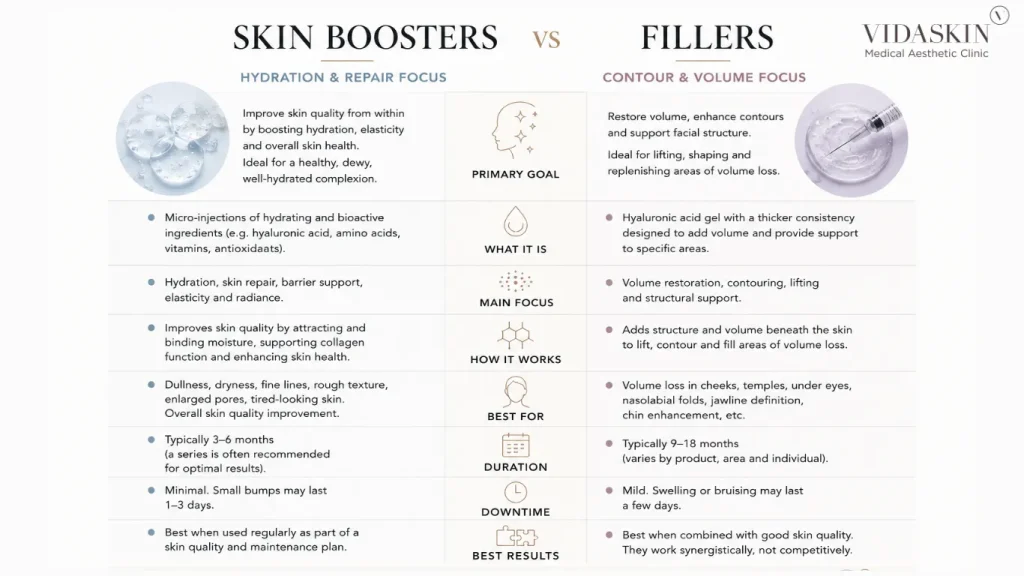
Hyaluronic acid-based skin boosters are generally used to improve hydration, suppleness, and skin glow. By attracting and retaining water in the dermis, they can help the skin look smoother, fresher, and less crepey.
These treatments are often useful when dullness and dehydration are major concerns. They do not replace structure, but they can improve the canvas on which other treatments work.
Regenerative injectables such as polynucleotide-based treatments are often used with the goal of supporting a healthier dermal environment, calmer skin, and improved resilience. These treatments are commonly discussed in the context of repair-focused or regenerative skin quality work.
They may be particularly relevant in sensitive, compromised, or post-procedure skin where the aim is not only hydration but also better recovery and tissue quality. This makes them different from treatments that are mainly hydration-led.
There is no universal best injectable for every patient. Some need hydration first, others need repair support, while others may benefit more from collagen stimulation or laser-based texture and pigment work.
The right sequence depends on skin condition, age, inflammation level, pigment risk, lifestyle, downtime tolerance, and the patient’s long-term goals. This is why personalised planning matters more than chasing a trending injectable in isolation.
Lasers can be excellent tools for treating pigmentation, pores, textural irregularities, and some forms of collagen stimulation. But even the best laser will not deliver its best result if the skin barrier is irritated, dehydrated, or poorly prepared.

Different lasers target different concerns, such as uneven tone, pigment, redness, texture, or resurfacing needs. They can be powerful tools in a skin quality plan when chosen and timed carefully.
However, lasers are not the whole answer to skin quality. If the skin is chronically dehydrated, inflamed, or lacking deeper dermal support, a laser alone may not deliver the overall refreshed look patients are hoping for.
Trying to fix pigment, laxity, dehydration, pores, and volume loss all at once can overload the skin and lead to disappointment. A more thoughtful plan usually works better, especially when the barrier needs time to recover between interventions.
Spacing treatments properly allows the skin to respond, heal, and adapt. This often produces a more natural result than stacking too many aggressive treatments into a short period.
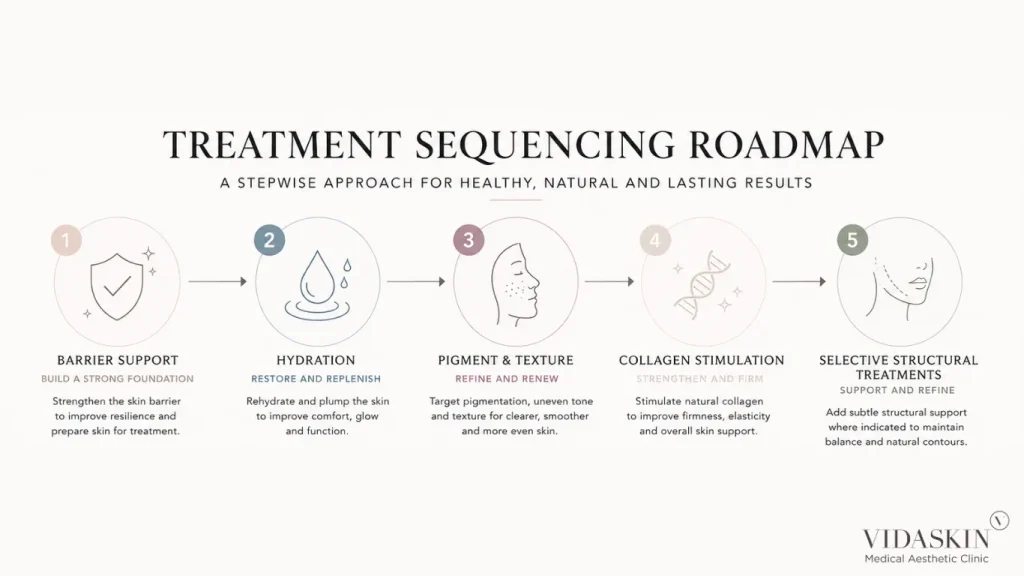
A long-term skin quality plan may begin with stabilising the skin barrier and controlling inflammation. It may then move into hydration support, pigment or texture correction, collagen stimulation and only later add more structural treatments if truly needed.
This kind of roadmap helps patients understand that skin rejuvenation is often a process, not a single event. It also makes the treatment journey more strategic and sustainable.
Preventive care in aesthetics does not mean doing more for the sake of it. It means intervening in a subtle, evidence-based way to maintain healthier skin so that future correction can remain lighter and more refined.
When skin quality is maintained earlier, future concerns may develop more gradually and be easier to manage. Good barrier care, collagen support, measured energy-based treatments, and suitable injectables can all help reduce the need for heavier corrective work later.
This approach usually aligns better with natural-looking outcomes. Patients often want to look fresher, not dramatically changed, and prevention supports that goal well.
A patient who keeps repeating filler without addressing poor skin quality may still look tired. Likewise, a patient who keeps chasing lasers while ignoring hydration, inflammation or structural support may not achieve the balanced result they expect.
This is why aesthetic planning should be holistic. Skin quality, structural support, and maintenance should work together rather than compete.
The most effective aesthetic strategy is often a long-term relationship with your skin rather than a series of isolated treatments. This means understanding what your skin needs at different life stages and adjusting the plan thoughtfully over time.
A personalised maintenance strategy is usually more effective than dramatic one-off interventions. Over time, this supports skin that looks healthier, calmer, more even, and more resilient.
At VIDASKIN, skin quality is treated as the foundation of facial rejuvenation rather than an afterthought. Dr Vicki and the medical team assess the skin and deeper facial layers together, then tailor a plan that may include collagen banking, hydration support, regenerative injectables, lasers, collagen stimulators, and doctor-guided skincare.
The goal is not simply to add filler or perform a laser in isolation. It is to create a treatment strategy that improves the skin’s condition, supports graceful ageing, and helps every other treatment perform better over time.
What does skin quality mean in aesthetics?
Skin quality refers to features such as texture, tone evenness, glow, hydration, firmness and elasticity. It describes how healthy, smooth and resilient the skin looks and functions.
Why is skin quality important even if I want fillers?
Because fillers improve structure, but the overlying skin still affects the final result. If the skin is dehydrated, uneven or lacking elasticity, the face may still look tired even after volume correction.
What is collagen banking?
Collagen banking refers to supporting collagen production early and consistently so the skin remains stronger and more resilient over time. It is a preventive approach rather than waiting for severe ageing changes to appear.
Are skin boosters the same as fillers?
No. Skin boosters are generally used to improve hydration and skin quality, while fillers are primarily used for contour, projection and volume support.
Can lasers alone improve skin quality?
Lasers can improve important aspects of skin quality such as pigmentation and texture, but they are often only one part of a broader plan. Hydration, barrier health, collagen support and regenerative care may also be needed.