The Truth About Buccal Fat Removal: Why Less Isn’t Always More

When “sharper” today becomes “hollow” tomorrow

Buccal fat removal (also called cheek fat removal) rose to prominence for creating leaner, more contoured cheeks. The appeal is obvious — a slimmer midface can look chic in your 20s. But the buccal fat pad is part of the face’s support system. When it’s reduced early, the midface may look flat or hollow sooner, and shadows can deepen with age. At VIDASKIN medical aesthetic clinic in Singapore, our philosophy is to preserve support and refine intelligently, not subtract indiscriminately.

The midface: where softness equals youth

The midface looks youthful when light reflects smoothly across the cheek–under-eye–nasolabial region. That smoothness comes from a gentle, convex support created by fat pads and deep retaining structures — not just tight skin.

Anatomy of buccal fat pad

Why the buccal fat pad matters

  • Contributes to midface fullness and a natural transition from lower eyelid to cheek.
  • Acts as a gliding pad around deeper structures, supporting movement and soft contours.
  • Works together with other fat compartments to reduce harsh shadows.

Ageing changes: it isn’t just skin

With time, multiple things shift at once:

  • Fat pads thin or move: the midface loses convexity → cheeks look flatter; shadows appear.
  • Skin quality declines: less collagen/elastin/HA → texture looks dull or crepey.
  • Deeper support loosens: SMAS and retaining ligaments relax → heaviness and jowls.

When buccal fat is removed early, the face may appear older earlier, because you’ve reduced a natural cushion that would have helped counter these age-related changes.
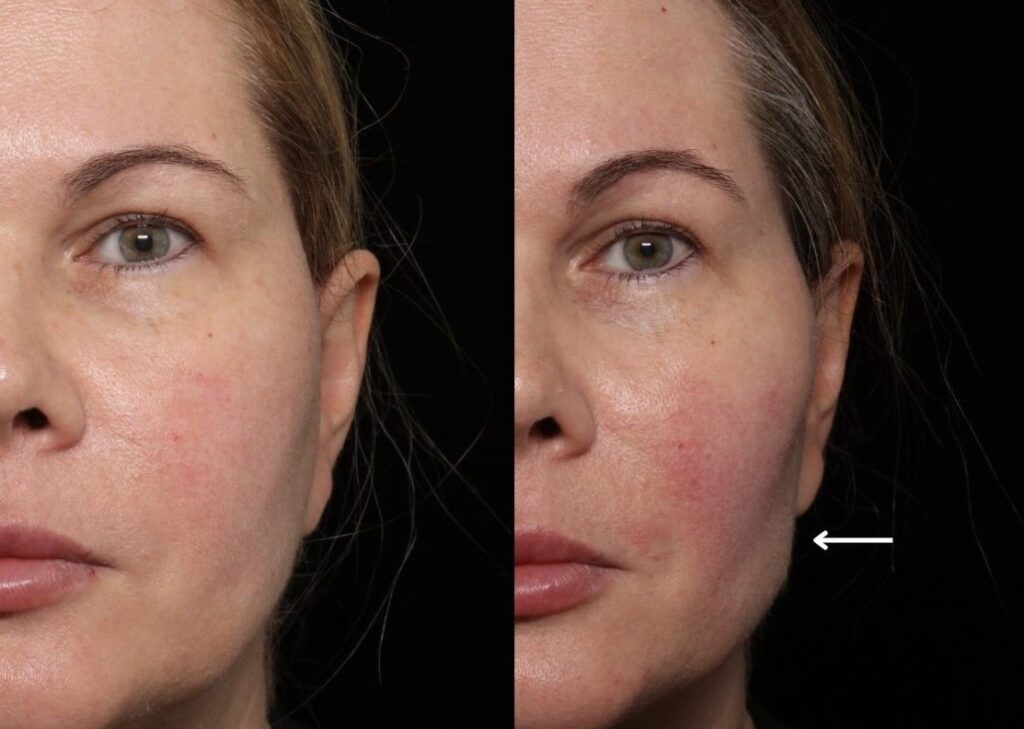
image of full vs. hollow midface

What buccal fat removal does — and what it doesn’t

What it does:

  • Reduces cheek fullness inside the mouth via a small incision.
  • Can create a leaner, more sculpted look at rest.

What it doesn’t do:

  • It does not improve skin quality (hydration/texture).
  • It does not lift descended tissues or address SMAS laxity.
  • It does not stop ageing; the face continues to lose support elsewhere over time.

Considerations to discuss with a surgeon:

  • Asymmetry or contour irregularities may occur when soft tissue is reduced.
  • Over-resection can lead to a gaunt look, particularly as you age.
  • All surgery carries risks (e.g., bleeding, infection) and downtime, which vary by patient and technique.
    (Patients should obtain personalised advice from an accredited surgeon.)

Why less isn’t always more

When you remove structural fat early, you may trade short-term slimness for long-term hollowing. As the dermis thins and deep support relaxes with age, the midface benefits from preserved volume that keeps light bouncing softly. In other words: fat = youthful support.

A quieter, smarter alternative: preserve support, refine the layers

At VIDASKIN, we prefer a layered, doctor-led non-surgical facelift treatment approach that respects anatomy and keeps options open.

1) Lift or support deeper layers (for shape)

  • Ultherapy PRIME (micro-focused ultrasound):
    • Targets specific depths including SMAS in suitable candidates to encourage collagen and improve support over time.
  • Titanium protocol (laser-based collagen support):
    • Aims to strengthen the deep dermis for a firmer canvas with minimal downtime.

Why this matters: When structure underneath improves, the face can look more lifted without removing protective fat.

2) Maintain or restore soft-tissue support (for smooth transitions)

  • HA fillers (placed conservatively in appropriate planes):
    • Can restore midface convexity and soften harsh transitions where volume is truly depleted.
    • Advantage of reversibility if adjustments are needed.
  • HCC Structura (bioremodelling HA):
    • Supports soft tissue quality and gentle contour, complementing structural treatments.

3) Elevate skin quality (for glow and texture)

  • Injectable skincare (e.g., Profhilo) to improve hydration and elasticity.
  • Mesoestetic peels/protocols to refine texture and even tone for better light reflection.

Pathways by concern

  • “My face looks round in photos, but my skin is good.”
    → Explore Ultherapy PRIME/Titanium for structure first. If still needed, conservative HA support in targeted areas.
  • “I look tired — shadows under eyes/cheeks.”
    → Prioritise skin quality (HCC, peels) + midface support (HA in suitable planes, Profhilo Structura).
  • “Mild early jowls, I’m not ready for surgery.”
    → Consider Ultherapy PRIME for SMAS support + Titanium for the dermis; maintain with injectable skincare.

(Suitability, placement, and parameters are doctor-determined after assessment.)

FAQs

Q1. What exactly is buccal fat removal?
A surgical reduction of the buccal fat pad through an incision inside the mouth to slim the lower cheek area.

Q2. Why can it age me faster?
Because midface fat supports youthful contours. Reducing it early can make hollows and shadows more visible as natural age-related changes continue.

Q3. Can skincare replace structural support?
Skincare is essential but acts mostly at or near the surface. Structure (SMAS/dermis/volume) is addressed with doctor-led treatments.

Q4. Are non-surgical options permanent?
No. Improvements are typically progressive and maintained with periodic care. Plans are customised to the individual.

Q5. I want a slimmer look without surgery — what are my options?
Discuss Ultherapy PRIME/Titanium for deeper support and conservative HA for balance. Your doctor will assess what is appropriate

Founded in 2015, Dr Vicki has grown with the clinic, to become one of the leading aesthetic clinicians in Singapore. She is an appointed key opinion leader and trains other aesthetic doctors on how to best use prestigious brands and treatments.

Share with: