- 501 Orchard Road, #04-08 Wheelock Place, Singapore 238880
- (65) 6235 4429
- hello@vidaskinclinic.com
- (65) 9830 0597

Ultherapy treatment in Singapore can provide a natural, lifted, and refreshed appearance without surgery, but how you care for your skin and what you combine it with will influence how long your results last.
By understanding how Ultherapy works at different skin depths—and how to support all layers of the face with complementary treatments—you can maintain your results more effectively over time.

Ultherapy uses microfocused ultrasound with real-time visualisation (MFU-V) to deliver energy into precise layers beneath the skin surface, including the collagen-rich dermis and the SMAS layer. This controlled thermal energy triggers a natural wound-healing response, stimulating new collagen and elastin production over the following months for gradual lifting and tightening.
Because Ultherapy works with your own biology rather than adding volume, results develop progressively and look natural, so you still look like yourself—just more lifted and defined.
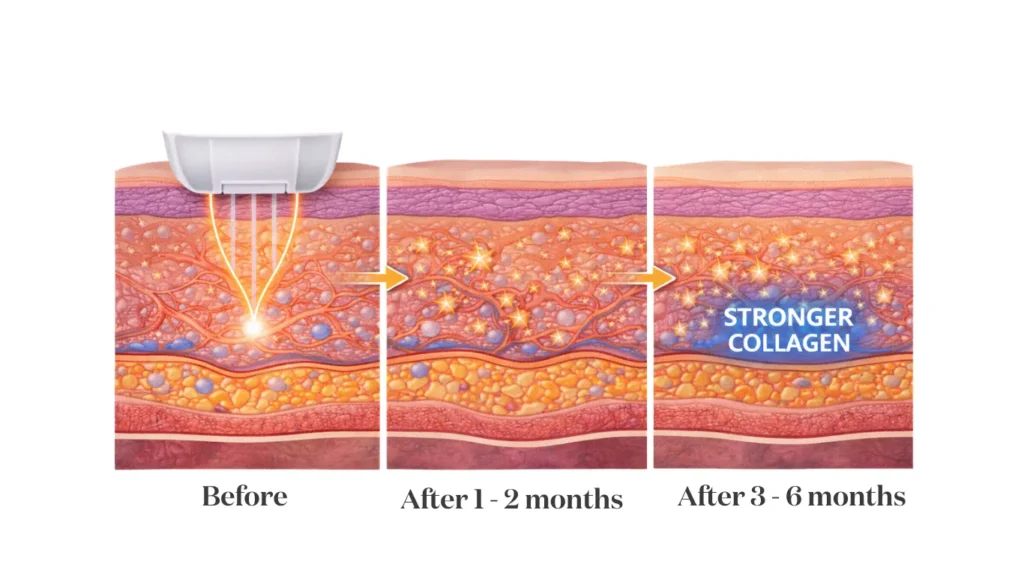
Collagen is the main structural protein that gives skin its firmness, elasticity, and support. As we age, collagen fibres break down more quickly than they are replaced, leading to fine lines, sagging, and loss of definition along the jawline and neck.
Ultherapy heats targeted points in the deeper tissue to a temperature that causes controlled collagen denaturation without damaging the skin surface. This micro-injury stimulates neocollagenesis, which is the production of new, stronger collagen fibres. Over time, this gradual remodelling process helps the skin look firmer, tighter, and more lifted.
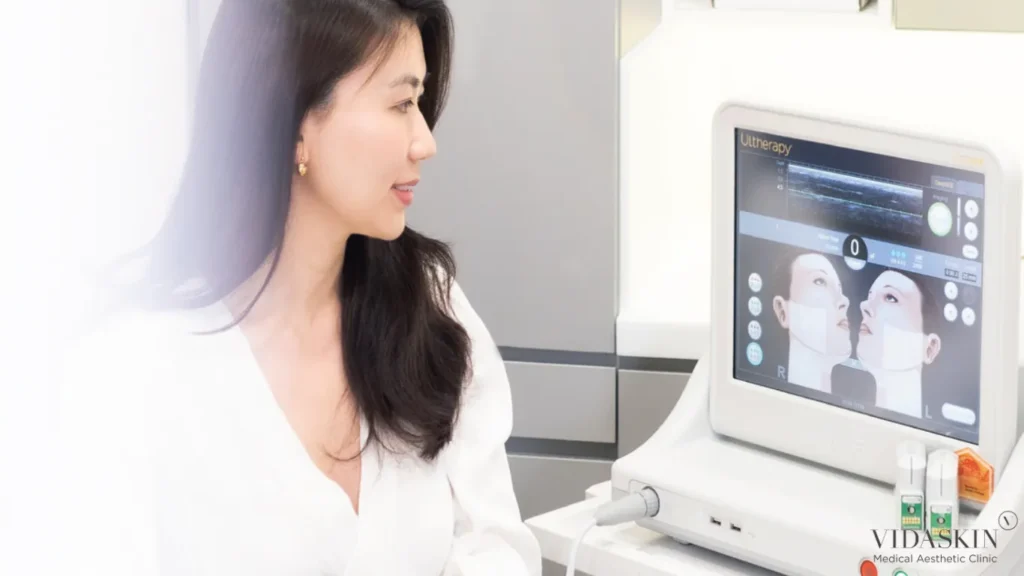
Over time, this accumulated experience supports safety, patient trust, and reliable outcomes.MFU-V technology allows your doctor to both see and treat. Ultrasound imaging maps out the tissue layers, while the device delivers energy precisely where it is most effective.
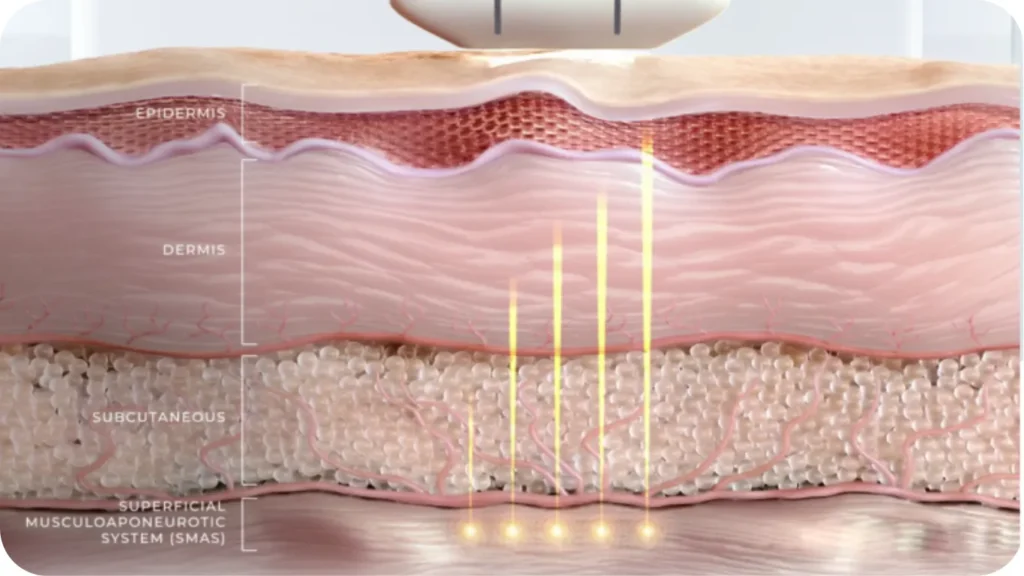
Different Ultherapy transducers can target specific depths, reaching from the more superficial dermis to deeper fibromuscular structures. This depth-specific approach helps maximise lifting and tightening while protecting the skin surface, which is why Ultherapy is often considered a non-surgical option for patients who are not ready for surgery.
Over time, this accumulated experience supports safety, patient trust, and reliable outcomes.
The SMAS, or superficial musculoaponeurotic system, is a fibrous support layer that connects the facial muscles to the overlying skin. It plays an important role in facial support, contour, and lifting.
In surgical facelifts, this layer is physically tightened and repositioned. Ultherapy works differently by stimulating collagen remodelling in the same foundational plane without incisions. By reaching the SMAS and nearby deep tissues, Ultherapy can improve jawline definition, lift the brows, and address sagging under the chin in a way that superficial treatments alone cannot achieve.
Knowing when to expect improvements and how long they may last helps patients plan a realistic maintenance schedule. Ultherapy is not an overnight treatment, but a gradual collagen-building process that continues over several months.
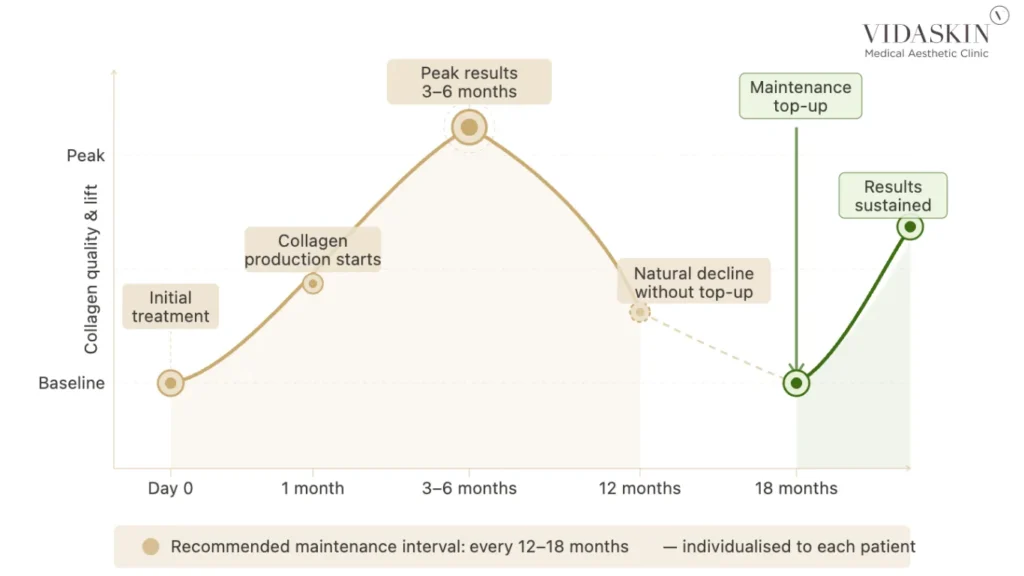
Some patients notice a subtle initial tightening soon after treatment, but the main visible changes usually appear gradually as new collagen forms. Most people begin to see more meaningful improvement from around two to three months, with continued refinement over the following months.
Because everyone’s collagen response is different, it is helpful to review progress using standardised before-and-after photographs at regular intervals.
Ultherapy results usually last around 12 to 18 months, although this varies depending on age, baseline skin quality, lifestyle, and the degree of laxity being treated. The collagen formed does not suddenly disappear, but natural ageing gradually reduces the visible lifting effect over time.
Lifestyle factors such as sun exposure, smoking, significant weight changes, and poor sleep may accelerate collagen loss. Good skincare, sun protection, and healthy daily habits can help support the longevity of results.
Many patients benefit from repeating Ultherapy approximately once every 12 to 18 months to top up collagen stimulation and slow the return of skin laxity. In some cases, smaller touch-up sessions to selected areas may be recommended earlier, depending on the patient’s needs.
A personalised maintenance plan may also include complementary treatments between Ultherapy sessions to support all layers of the face.s.
Facial ageing is multi-layered. Different parts of the face age at different depths, which is why a combination approach often gives more balanced and longer-lasting results than a single treatment alone.
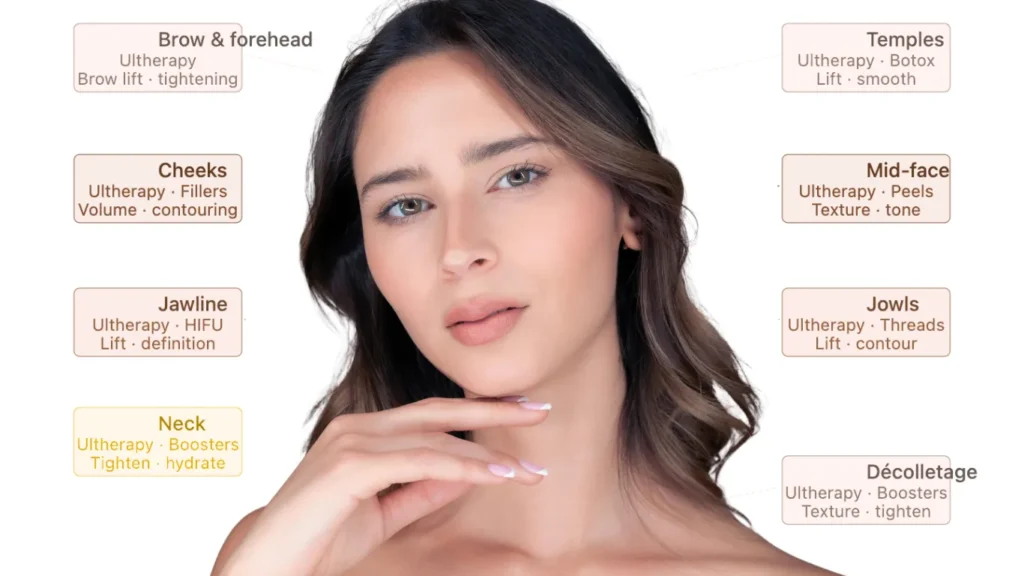
Different technologies target different levels of the face:
This multi-layer approach is useful because the face is not made up of just one ageing layer. The skin, fat compartments, retaining structures, and deeper support tissues all contribute to how youthful or tired the face appears. Combining treatments that address these different levels can create a more harmonious and sustained result.
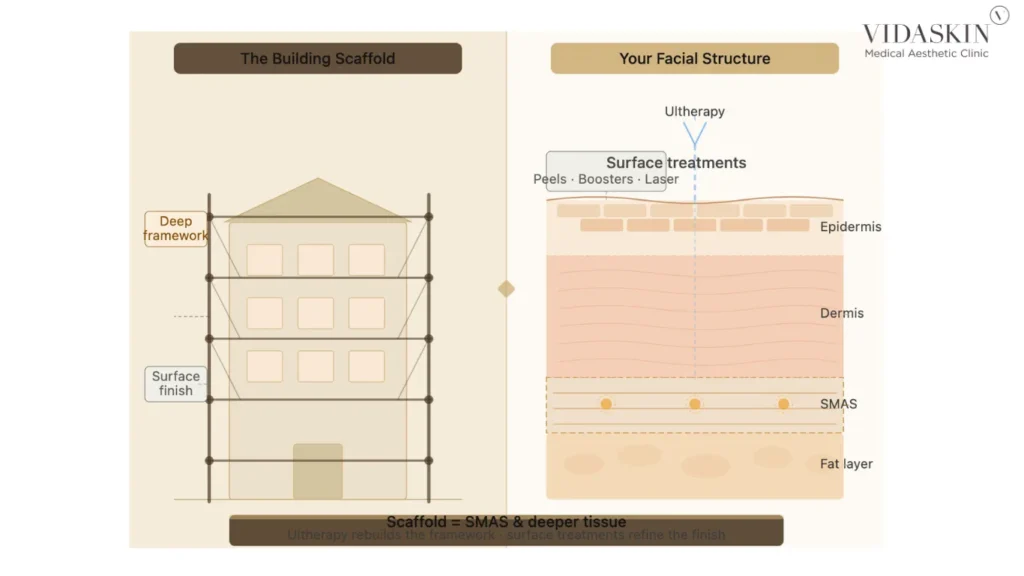
Ultherapy creates deeper structural support, but daily habits help preserve those gains. Patients are more likely to maintain their results well when they follow a broader collagen-supportive routine.
Examples include:
Think of Ultherapy as strengthening the internal scaffolding, while skincare and lifestyle measures help maintain the outer structure and quality of the skin.
Ageing changes happen gradually, so regular review is useful to decide when maintenance treatment may be appropriate. Standardised photos taken in similar lighting and angles can help patients notice subtle changes more objectively.
A review may show whether the main issue is returning skin laxity, loss of facial volume, or changes in skin texture and quality. This makes it easier to decide whether maintenance should involve repeat Ultherapy, Titanium, RF, Profhilo, skin boosters, fillers, or a combination of these.
Ultherapy is not only for advanced skin sagging. In suitable candidates, it can also be used earlier as part of preventive ageing care.
Patients in their late 20s to 40s who are starting to notice early heaviness around the jawline, mild brow drooping, or softening of the neck may benefit from earlier collagen stimulation. At this stage, treatment is less about reversing advanced sagging and more about preserving support and delaying progression.
When combined with good skincare and selected collagen-supportive treatments, this approach can help maintain a fresher and more lifted appearance over time.nd with real-time imaging, allowing treatment at precise depths beneath the skin.
For patients who prefer non-surgical options, Ultherapy can act as a cornerstone treatment in a longer-term maintenance plan. Repeating treatment at suitable intervals, while layering in supportive options such as Titanium, RF, Profhilo, or fillers when needed, can help maintain a natural and refreshed look.
Expectation setting is important. Ultherapy does not replace a surgical facelift, but it can provide meaningful lifting and tightening for suitable patients who want a non-invasive option.
Repeat treatment may be considered when the initial lifting effect begins to soften, when new areas of concern appear, or when review shows that further collagen stimulation would be beneficial.
Many patients find that a 12 to 18-month interval works well, although the ideal timing depends on the individual’s rate of ageing, treatment goals, and overall treatment plan.
At VIDASKIN, Ultherapy is performed in a medical setting with treatment protocols tailored to the patient’s skin quality, degree of laxity, facial structure, and goals. A consultation can help determine whether Ultherapy alone or a more layered plan involving RF, Titanium, Profhilo, skin boosters, or fillers would be more appropriate.
For patients looking to maintain sculpting and lifting results over time, a personalised plan that addresses the different layers of the face can often give more balanced and sustainable results.
Learn more about Ultherapy PRIME treatment.
Most patients repeat Ultherapy maintenance about every 12 to 18 months, depending on their degree of skin laxity, age, and lifestyle factors. A doctor can recommend a personalised interval based on collagen response and treatment goals.
Ultherapy results typically last around 1 to 1.5 years before the natural ageing process gradually softens the lifting effect. Good sun protection, skincare, and complementary collagen-supportive treatments may help maintain results for longer.
Yes. Ultherapy is often combined with treatments that target different layers of the face, such as RF skin tightening, Titanium lifting, skin boosters, Profhilo, and dermal fillers. This multi-layer approach can support deep lifting, improve skin quality, and restore volume where needed.
In suitable candidates, Ultherapy can be used preventively, especially for patients with mild skin laxity who want to support collagen earlier. This may help slow the progression of visible sagging over time.
Patients with mild to moderate skin laxity along the brows, jawline, or neck who want a non-surgical option may be good candidates. A consultation at VIDASKIN can help determine whether Ultherapy alone or in combination with other treatments would be most suitable. depth selection, energy delivery, and treatment planning—not just the device itself.