- 501 Orchard Road, #04-08 Wheelock Place, Singapore 238880
- (65) 6235 4429
- hello@vidaskinclinic.com
- (65) 9830 0597
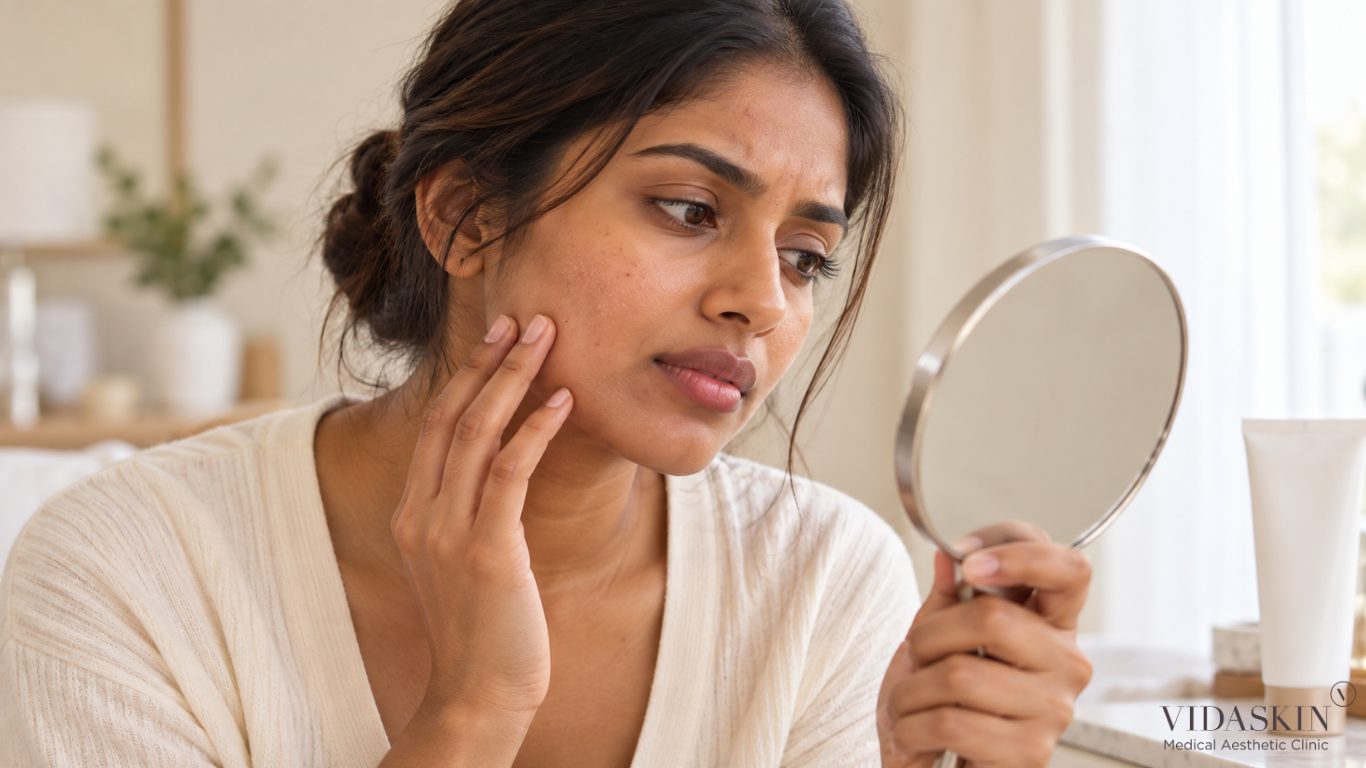
Some acne treatments can cause a temporary early worsening before improvement becomes apparent. However, a new breakout after skincare is not automatically a sign that the product is working. Irritation and ongoing acne can look similar, and they need different responses.[1]
The useful question is what changed, when it changed, and how the skin feels. A few additional spots after starting an acne medicine need a different conversation from a face that is burning, swollen, or becoming increasingly sore.
“Purging” is a common skincare term for an early increase in visible acne after starting certain treatments. Adapalene, a topical retinoid, is one example for which early worsening is described in patient information. The treatment works on acne within the follicle, and its full benefit takes time to assess.[2]
The term should not become an explanation for every reaction to a new product. It is more useful to identify the actual product and the pattern of symptoms than to decide, from appearance alone, that the skin is “clearing itself out”.
Dryness, redness and mild stinging can occur with topical acne treatment, particularly early on. More troublesome burning, marked peeling or a worsening rash should prompt advice. Singapore’s guidance on adapalene also highlights blistering, swelling and other significant reactions as reasons for medical review.[3]
Pay attention to how the skin feels between applications. If cleansing or applying a previously comfortable moisturiser has become painful, that information matters. The aim is not to endure as much irritation as possible in pursuit of faster improvement.
The distribution can be useful, but it cannot confirm the cause by itself. Consider whether the change is mainly additional acne lesions, a broader irritated patch, or a different kind of rash. Photographs and the treatment timeline can help your doctor assess that distinction.
A review should also ask whether several products were introduced together. If a cleanser, exfoliating toner, and retinoid were all started in the same week, identifying the source of irritation becomes more difficult. Frequent changes can also make it harder to judge whether an acne treatment is helping.[4]
Acne treatment is usually assessed over weeks rather than days. NICE recommends a review after an initial 12-week course, while also recognising that improvement may take six to eight weeks to become noticeable. That timetable is for assessing treatment effectiveness; it is not a reason to delay advice about significant side effects.[5]
If the skin is comfortable but improvement is uncertain, a planned review can assess the trend. If inflammation is worsening, painful deeper lesions are developing or the routine is difficult to tolerate, arrange an earlier discussion.

A gentle cleanser, suitable moisturiser and sun protection can support the skin during acne treatment. A moisturiser can be particularly helpful when treatment causes dryness, and a product labelled non-comedogenic is a reasonable starting point for acne-prone skin.[6]
Avoid adding several products to “fix” an early reaction. Keep a record of what you use and follow the instructions for the prescribed treatment. This makes any adjustment more deliberate and easier to assess.
Some topical regimens can be introduced gradually to reduce irritation. Local patient guidance describes this approach for adapalene combined with benzoyl peroxide. The appropriate schedule should follow the product and your clinician’s advice.[7]
Using more product or applying it more often than directed does not necessarily improve acne faster. If you are unsure about the amount or the area to treat, ask for a demonstration rather than guessing.
If acne remains active, the answer may involve a different medical plan rather than further skincare changes. Treatment selection depends on the type and severity of acne, previous response, and the risk of scarring. Current guidelines support several approaches, including topical and systemic options when appropriate.[8]
The consultation should distinguish a tolerability problem from insufficient acne control. These can coexist, and treating only one may leave you unable to maintain the plan.
Severe irritation or symptoms suggesting an allergic reaction should not be treated as routine purging. Stop the suspected product and seek medical advice. Swelling of the lips or face, breathing difficulty, or a rapidly developing widespread reaction requires urgent care.[1]
For less urgent concerns, take photographs and note the timing of applications and symptoms. Bring the full routine to the review, including products used only occasionally, so that the advice reflects what is actually reaching your skin.
A breakout after a moisturiser should not automatically be described as an expected treatment flare. Consider the full formulation, whether other products changed at the same time and whether there is irritation. A product labelled non-comedogenic may be less likely to clog pores, but individual tolerance still matters.[6]
If the product repeatedly causes discomfort or new lesions, review it rather than continuing solely because someone has said the skin must purge first. Keep the label so your clinician can assess what you have been using.
No. Burning is a symptom to assess, not a measure of effectiveness. Mild irritation can occur with some topical acne medicines, but troublesome or persistent symptoms may require a change in frequency, supporting skincare or the treatment itself.[3]
Describe the symptom precisely: when it begins, how long it lasts and whether the skin looks red, cracked or swollen. That is more useful than reporting only that the treatment feels “strong”. Severe symptoms deserve prompt advice before you apply it again.
Early worsening is recognised with some retinoids, so a few additional spots do not automatically mean treatment must be abandoned. The severity of the change and the presence of irritation matter. Contact your prescriber if you are unsure how to interpret the reaction.[2]
Do not continue through a severe reaction simply to complete a set number of weeks. Equally, avoid repeatedly starting and stopping a comfortable regimen without discussing it, because an inconsistent trial can be difficult to evaluate.
Peeling is not a treatment target. Dryness and scaling are recognised local reactions to adapalene, and the prescribing information allows adjustment according to tolerance. The desired outcome is better acne control with an approach the skin can tolerate.[9]
Tell your doctor if peeling is interfering with work, makeup or daily comfort. Those practical effects matter. The plan should explain how to manage them and when to seek advice, rather than leaving you to judge effectiveness by how much skin is shedding.
Combining several potentially irritating products can make an early adjustment period more difficult. Local guidance for adapalene-based treatment advises caution with additional drying preparations. Whether an exfoliant has a useful role depends on the medicine, the rest of the routine and your skin’s tolerance.[7]
Ask before combining products, particularly if your skin is already sore. If several are appropriate, your clinician can explain their purposes and how to introduce them. More active ingredients do not automatically make a routine more effective.
Arrange a review if the trend is worsening, particularly if lesions are painful, deep or leaving scars. A full treatment assessment considers the diagnosis, consistency of use and whether the regimen is sufficient. Persistent acne can require a change in medical treatment.[10]
Bring photographs and the dates of any treatment changes. They can help distinguish a short fluctuation from sustained deterioration. You do not need to wait until the problem is severe before asking whether the current plan remains appropriate.
Yes. Acne treatment can dry or irritate the skin while acne itself remains active. Supporting the skin with a suitable moisturiser may improve tolerance, but it does not replace treatment of ongoing acne.[6]
This is why a review should address both how many lesions are appearing and how comfortable the skin feels. If the routine is too uncomfortable to use reliably, that practical problem needs attention alongside the choice of acne medicine.
Bring the product names, ingredient labels, start dates and application frequency. Note which symptoms appeared first and whether you introduced anything else around the same time. Photographs taken before the change and during the reaction can be useful.
Also mention any prescription medicines, pregnancy or plans for pregnancy. The review should leave you clear about what to use now, what to pause and the signs that should prompt earlier contact, rather than relying on the word “purging” as reassurance.
If you are uncertain whether your skin needs time or a different approach, Dr Nick Wang can review the acne and the routine together.
A personalised acne treatment plan should explain both the expected response and how to manage tolerability. The aim is to make progress with a routine you understand and can maintain.
[1] DailyMed. Adapalene Gel USP 0.1%. Consumer medicine label and warnings. View source
[2] MedlinePlus. Adapalene. Patient medication information. View source
[3] HealthHub Singapore. Adapalene. Patient medication information. View source
[4] American Academy of Dermatology. 10 skin care habits that can worsen acne. View source
[5] NICE. Acne vulgaris: management, NG198. Recommendations, updated April 2026. International guidance; local prescribing requirements apply. View source
[6] American Academy of Dermatology. Moisturizer: Why you may need it if you have acne. View source
[7] National University Health System Singapore. Topical Adapalene with Benzoyl Peroxide Gel. Patient medication information. View source
[8] Reynolds RV et al. Guidelines of care for the management of acne vulgaris. Journal of the American Academy of Dermatology, 2024. View source
[9] DailyMed. Adapalene Gel USP 0.3%. Prescribing information, including local cutaneous reactions. View source
[10] American Academy of Dermatology. Acne: Diagnosis and treatment. View source

