- 501 Orchard Road, #04-08 Wheelock Place, Singapore 238880
- (65) 6235 4429
- hello@vidaskinclinic.com
- (65) 9830 0597

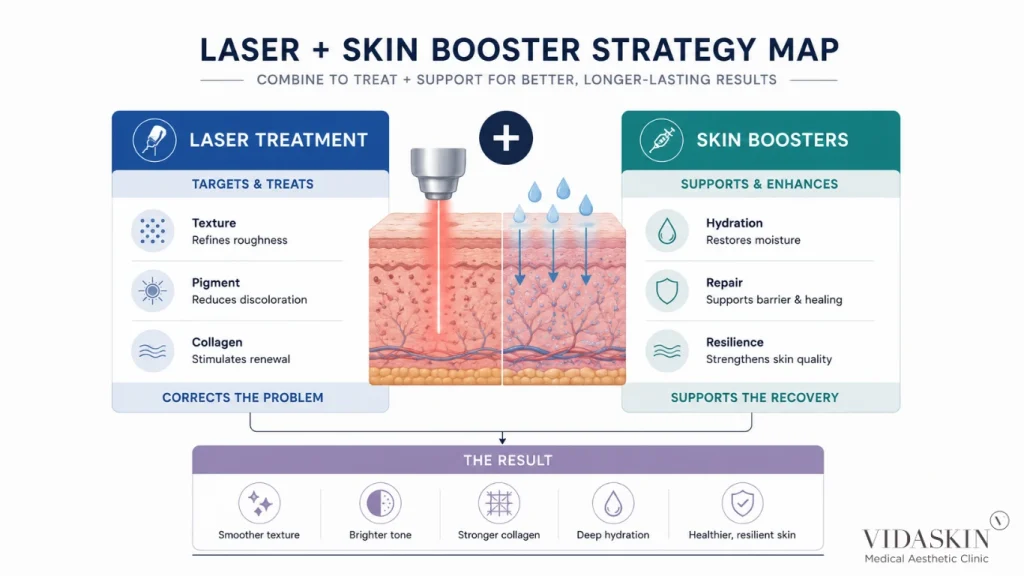
Laser treatments can improve skin texture, pigmentation, pores, and collagen stimulation, but the quality of recovery after treatment also matters. In many cases, skin boosters may be used as part of a broader plan to support hydration, skin quality, and post-laser recovery.
This is because laser procedures place controlled stress on the skin in order to trigger renewal. After that process begins, the skin needs adequate hydration, barrier support, and a healthy dermal environment to recover efficiently and achieve the best possible outcome.

After energy-based treatment, the skin enters a repair phase. During this period, the barrier may be more vulnerable, transepidermal water loss may increase, and the skin can feel drier, more reactive, or tighter.
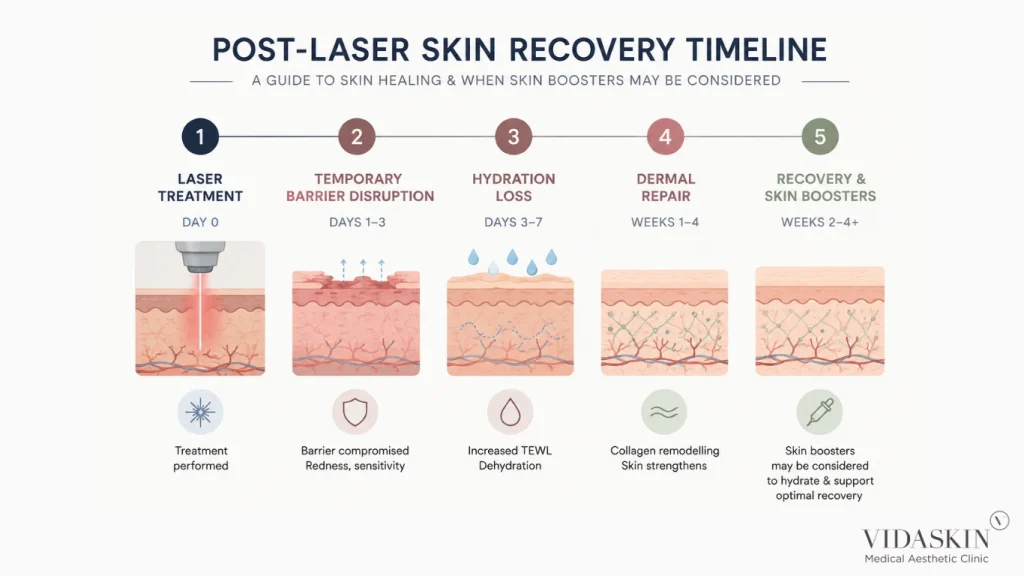
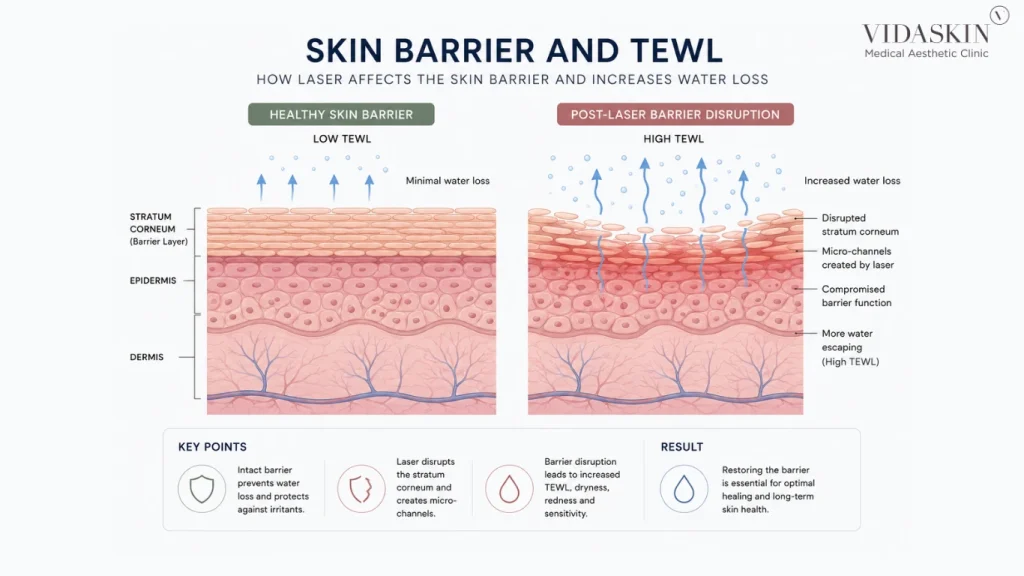
Many laser treatments create controlled thermal injury or microscopic zones of damage within the skin. This is part of how they stimulate collagen remodelling and resurfacing, but it can temporarily disrupt the skin barrier during the healing period.
When the barrier is disrupted, the skin may be more prone to redness, sensitivity, and moisture loss. This is why post-laser aftercare usually focuses on gentle cleansing, sun protection, moisturisation, and avoiding unnecessary irritation.
Post-laser dehydration happens partly because the skin barrier has been temporarily compromised. When this happens, transepidermal water loss increases, meaning the skin loses water more easily into the environment.
This can leave the skin feeling tight, dry, or rough, even when healing is progressing normally. Supporting hydration during this stage may help improve comfort and support a healthier recovery environment.
Following laser treatment, the skin goes through a coordinated healing response involving inflammation, tissue repair, collagen remodelling, and barrier restoration. The dermis and epidermis do not heal in isolation; they influence each other throughout recovery.
Because of this, treatment outcomes are influenced not only by the laser itself, but also by the quality of wound healing, hydration, inflammation control, and the condition of the extracellular matrix during recovery.
Skin boosters are injectable treatments designed to improve skin quality rather than add contour or bulk. Depending on the formulation, they may focus mainly on hydration, repair signalling or long-term dermal support.
One reason skin boosters may complement laser treatments is their ability to replenish hydration at the dermal level. Hyaluronic acid-based skin boosters are especially known for attracting and retaining water, which can help improve skin suppleness and reduce dehydration-related roughness.
This may be helpful after laser treatment when the skin feels depleted or dry. Well-hydrated skin often appears smoother, more radiant, and more comfortable as recovery progresses.
Beyond hydration, some skin boosters may help create a more favourable healing environment in the dermis. Polynucleotide-based treatments are often used with the goal of supporting tissue repair, calming inflammation, and improving overall skin resilience.
Rather than simply making the skin look plumper, this type of approach aims to improve how the skin recovers and functions. This may be particularly relevant for compromised, sensitive, or post-procedure skin.
When recovery is supported well, the visible outcome of laser treatment may also improve. Better hydration, more stable barrier function, and healthier dermal repair can contribute to smoother texture, improved glow, and more resilient-looking skin.
This does not mean every laser patient automatically needs a skin booster. The choice depends on the type of laser, the patient’s baseline skin condition, the degree of dehydration or sensitivity, and the overall treatment plan.
The extracellular matrix, or ECM, is the supportive network that surrounds skin cells within the dermis. It includes structural proteins such as collagen and elastin, along with glycosaminoglycans and other molecules that help regulate hydration, support, and cellular communication.
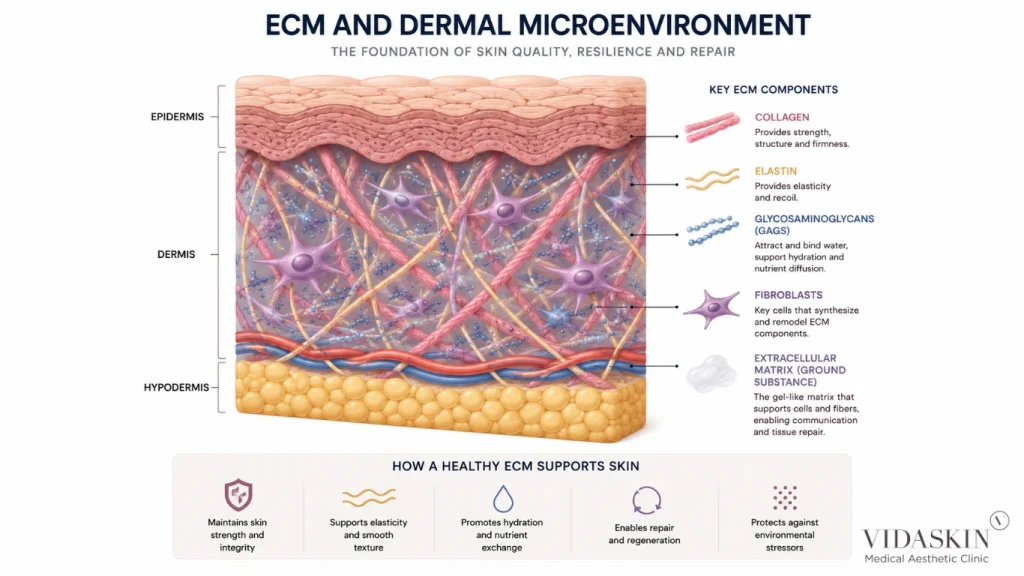
The ECM gives skin much of its structural integrity and elasticity. It acts like a scaffold that helps maintain firmness, resilience, and organisation within the dermal layer.
It also plays a role in how skin cells communicate, migrate, and respond to injury. This is one reason ECM health is closely linked to wound healing and long-term skin quality.
When the ECM is healthy, the skin tends to look firmer, smoother, and more resilient. When it becomes disorganised or depleted through ageing, inflammation, or damage, the skin may look thinner, rougher, and less elastic.
This matters after laser treatment because the skin is trying to rebuild and remodel. Supporting ECM health may help the skin recover into a stronger, more functional state rather than simply returning to baseline hydration alone.
The dermal microenvironment refers to the biological setting in which fibroblasts, inflammatory signals, hydration molecules, and matrix proteins interact. A healthier microenvironment supports better regeneration, collagen turnover, and overall tissue quality.
In practical terms, this means the goal is not only to hydrate the skin but also to support the conditions in which the skin can repair itself more effectively. This is where different classes of skin boosters may play different roles.
Both polynucleotide-based injectables and hyaluronic acid skin boosters may improve skin quality, but they do so in different ways.
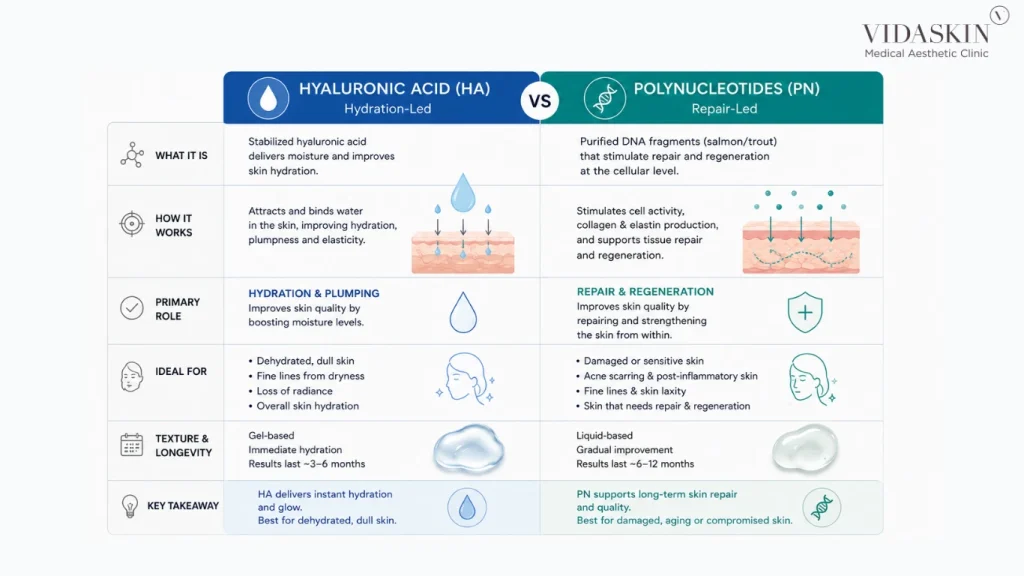
Hyaluronic acid skin boosters are generally used to improve hydration, elasticity, and skin glow by drawing and retaining water in the skin. They are often chosen when dehydration, dullness, and fine surface textural issues are major concerns.
Polynucleotide-based treatments are more often positioned as regenerative or repair-focused injectables. They are used to support tissue healing, reduce inflammation, and improve dermal resilience over time.
In simple terms, hyaluronic acid is often more hydration-led, while polynucleotides are often more repair-led. Both may improve skin quality, but one may be more suitable when the main concern is water balance, whereas the other may be more suitable when the concern is damaged, sensitive or slower-recovering skin.
Some treatment plans may even combine or sequence these approaches depending on the skin’s condition and the treatment goals. The most appropriate choice depends on timing, recovery needs, and the underlying skin problem being addressed.
There is no single best skin booster for every patient. A doctor will consider the type of laser used, the degree of barrier compromise, the skin’s hydration level, the presence of inflammation, and whether the main need is hydration, repair, or both.
At VIDASKIN, this may involve tailoring the plan using deep hydration skin boosters, polynucleotide-based treatments such as Rejuran, or a staged combination approach depending on how the skin behaves after treatment.
Immediate recovery is only part of the picture. Long-term skin quality also depends on how well the barrier restores itself and how resilient the skin becomes after treatment.
Skin barrier recovery involves re-epithelialisation, restoration of lipids within the stratum corneum, normalisation of transepidermal water loss, and gradual return of epidermal integrity. This process can be influenced by aftercare, inflammation, and the baseline health of the skin.
Supporting barrier repair generally means reducing unnecessary irritation, protecting the skin from UV exposure, and maintaining hydration while the skin rebuilds its protective function.
Efficient healing is supported by gentle skincare, sun avoidance, appropriate moisturisation, a healthy inflammatory response, and adequate hydration. In some patients, adjunctive treatments may be introduced to support dermal quality and recovery.
Lifestyle factors also matter. Smoking, excessive sun exposure, poor sleep, and an impaired skin barrier can all interfere with how well the skin recovers after laser procedures.
The goal after laser treatment is not only to recover quickly but to maintain healthier and more resilient skin over time. This often requires a broader plan that includes medical-grade skincare, sun protection, suitable intervals between procedures, and targeted skin quality treatments when needed.
When used appropriately, skin boosters may form part of this long-term strategy by helping the skin remain hydrated, better supported, and more responsive to future treatments.
At VIDASKIN, post-laser recovery planning is personalised according to your skin condition, treatment type, and recovery goals. Depending on your needs, this may include hydration-focused skin boosters, repair-oriented polynucleotide treatments, laser-compatible skincare, and a tailored aftercare strategy.
Dr Vicki and the medical team can advise whether your skin would benefit more from hyaluronic acid-based hydration support, regenerative polynucleotide skin boosters, or a staged treatment plan after laser procedures. The aim is to support recovery in a way that strengthens skin quality rather than simply masking temporary dryness.
Learn more about Skin Booster Treatments today
In selected patients, skin boosters may be used as part of a post-laser skin recovery plan. The right timing depends on the type of laser, the skin’s healing stage and your doctor’s assessment.
Laser treatments can temporarily disrupt the skin barrier, which increases transepidermal water loss and can make the skin feel dry, tight or sensitive during recovery.
The extracellular matrix is the supportive network in the dermis made up of collagen, elastin and other structural molecules that help maintain skin strength, elasticity and repair function.
Hyaluronic acid skin boosters are usually more hydration-focused, while polynucleotide treatments are more often used to support repair, regeneration and long-term dermal resilience.
When chosen appropriately, skin boosters may help support hydration, barrier recovery and overall skin quality after laser treatment. The benefit depends on the patient’s skin condition, treatment type and recovery plan.
