- 501 Orchard Road, #04-08 Wheelock Place, Singapore 238880
- (65) 6235 4429
- hello@vidaskinclinic.com
- (65) 9830 0597

Skin rejuvenation continues to evolve, and in Singapore, many patients are now moving beyond simple hydration toward what practitioners describe as bio-remodelling. Rather than only improving moisture levels, modern skin booster treatment approaches aim to support skin quality, elasticity, and long-term skin health.
If you are researching skin booster benefits, this guide explains how newer treatment strategies work and why they are increasingly chosen by patients who prefer natural-looking, gradual improvement.

Earlier skin boosters were mainly designed to deliver hyaluronic acid to improve hydration and surface smoothness. While hydration remains important, current treatment approaches aim to support multiple biological processes involved in skin ageing.
These include hydration, collagen activity, elasticity, skin barrier strength, and overall skin quality. This broader approach is commonly described as bio-remodelling, where the focus is on supporting the skin’s internal environment rather than simply filling or volumising.
For many individuals in Singapore, this approach appeals because results tend to look subtle, refreshed, and natural rather than overdone.
Hyaluronic acid remains the foundation of most skin booster treatments. It helps improve hydration, smoothness, and skin radiance, and can provide mild plumping. However, hyaluronic acid alone does not significantly support deeper collagen processes or structural laxity. For this reason, modern treatment strategies often combine hyaluronic acid with additional bioactive components.
Beyond hydration, hyaluronic acid has also been shown to support the micro-environment of the tissue in which it is placed. By helping maintain moisture balance, supporting cellular signalling, and preserving structural stability within the dermis, HA contributes to a healthier skin environment over time.
Clinical observations suggest that this supportive role may help slow several visible aspects of skin ageing, including age-related fat loss, gradual collagen decline, and elastin breakdown. For this reason, HA is increasingly viewed not only as a hydrating agent but as a foundational component in maintaining overall skin quality and resilience.
In contemporary skin booster treatment protocols, hyaluronic acid serves as a hydrating base. Other components are layered with it to support regenerative activity and collagen pathways. This combination approach defines the newer bio-remodelling trend increasingly seen in aesthetic practice.
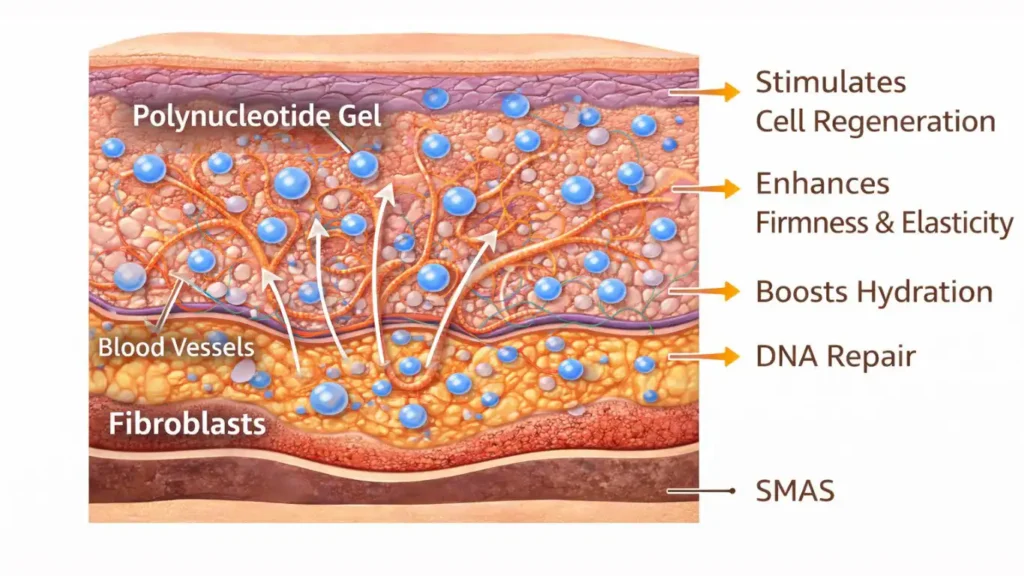
Polynucleotides are biocompatible molecules derived from DNA fragments. In aesthetic treatments, they are used to support skin repair, elasticity, barrier function, and overall skin quality.
They are often considered for individuals experiencing dullness, fine lines, thinning skin, or early loss of firmness. Polynucleotide-based boosters are typically positioned as supportive and regenerative rather than volumising.
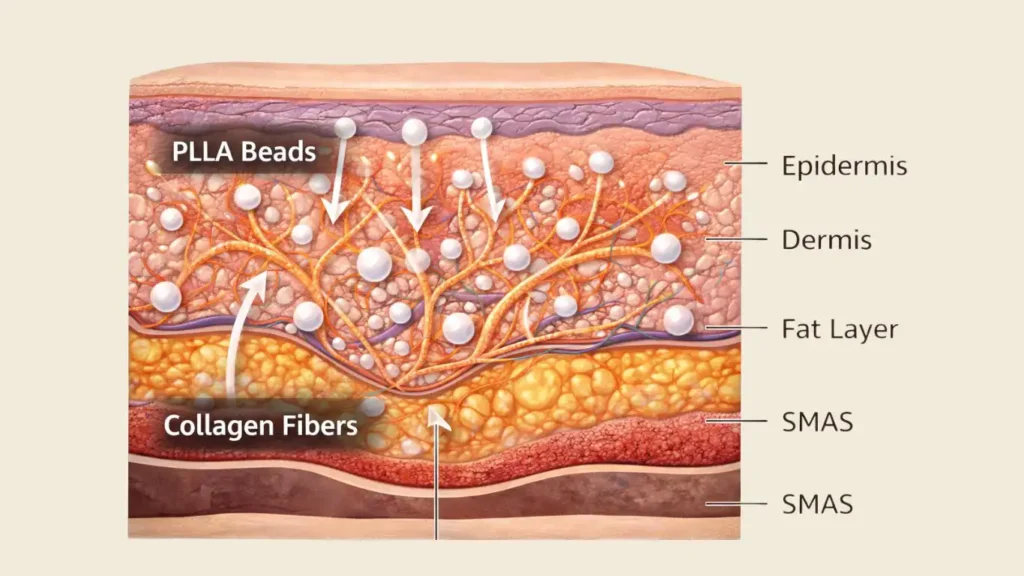
Poly-L-lactic acid works differently from hyaluronic acid. Instead of focusing on hydration, it supports collagen activity gradually over time. This may help improve skin firmness, texture, and mild laxity.
Treatments containing PLLA are often considered when longer-term structural support is desired.
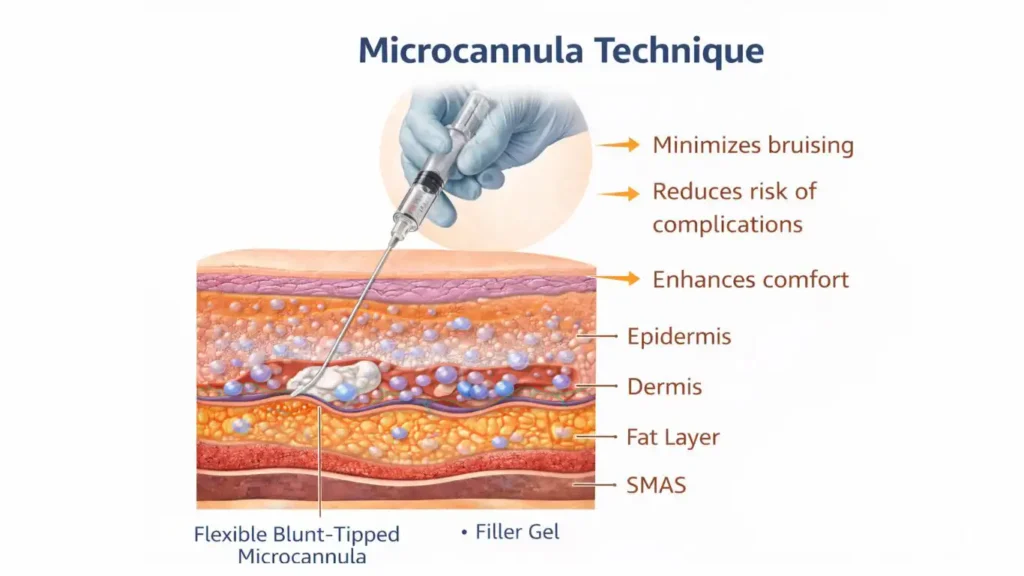
The delivery method can influence comfort, downtime, and how evenly the product is distributed.
A micro-cannula is a blunt-tipped instrument that allows product to be distributed beneath the skin using fewer entry points. This may help reduce bruising risk, improve comfort, and allow smoother distribution. It is commonly used for delicate areas or broader treatment zones.
Multi-needle injector devices deliver small, precise micro-deposits across the skin surface. This method is often used for full-face hydration, skin texture refinement, and overall skin quality improvement. Technique selection depends on individual goals and practitioner assessment.
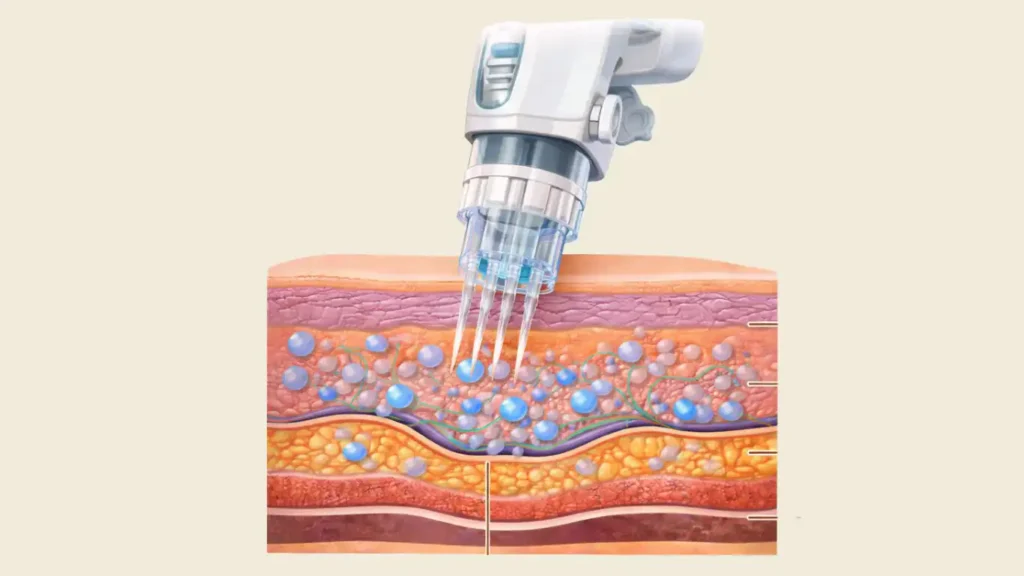
Many modern skin treatments are combined with supportive approaches to optimise recovery and skin response.
Exosome-based formulations may be used alongside treatments to support skin recovery, barrier function, and overall skin quality. They are generally considered supportive rather than primary volumising treatments.
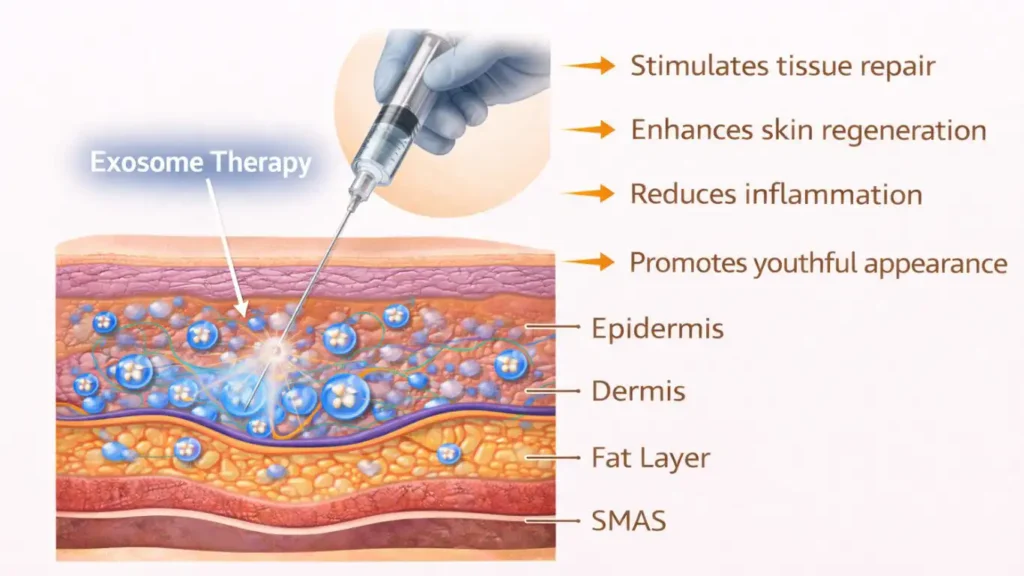
One of the most common questions about skin booster treatment is when visible improvement begins.
After treatment, mild redness, small bumps, or slight swelling may occur. These effects are temporary and usually settle within a short period.
Hydration improvements may be noticed within one to two weeks. Skin texture and smoothness often improve gradually. Treatments that support collagen typically require several weeks to months for a more visible change. Individual results vary depending on skin condition and treatment approach.
Skin booster treatments are usually performed in a planned series rather than a single session. This allows gradual stimulation, layered improvement, and more sustained enhancement of skin quality over time.
Many patients in Singapore prefer this approach because it produces progressive, natural-looking improvement rather than sudden change.
Proper aftercare helps maintain results. Daily sunscreen use is essential, especially in Singapore’s climate. It is also advisable to avoid excessive sun exposure, intense heat, and to follow personalised aftercare instructions provided by your practitioner.
If you are considering skin booster treatment, a personalised consultation is the most important first step.
At VIDASKIN Medical Aesthetic Clinic, treatment plans are tailored based on your skin condition, concerns, and desired outcome. A professional assessment helps determine whether a hydration-focused, regenerative, or collagen-supporting approach is most suitable for your skin.
Many patients seek treatment not only for hydration, but for smoother texture, improved skin quality, and a naturally refreshed appearance.
Book your consultation to explore modern bio-remodelling strategies designed to support long-term skin health and subtle, natural results.