- 501 Orchard Road, #04-08 Wheelock Place, Singapore 238880
- (65) 6235 4429
- hello@vidaskinclinic.com
- (65) 9830 0597

Acne scars form through a combination of inflammation, collagen destruction, and abnormal wound healing. Because scars vary in shape, depth, and tethering, no single treatment can address all scar types effectively.
A multi-modality approach treats scars at different structural levels—releasing what is pulling the skin down, stimulating collagen where it is lost, and resurfacing uneven texture.
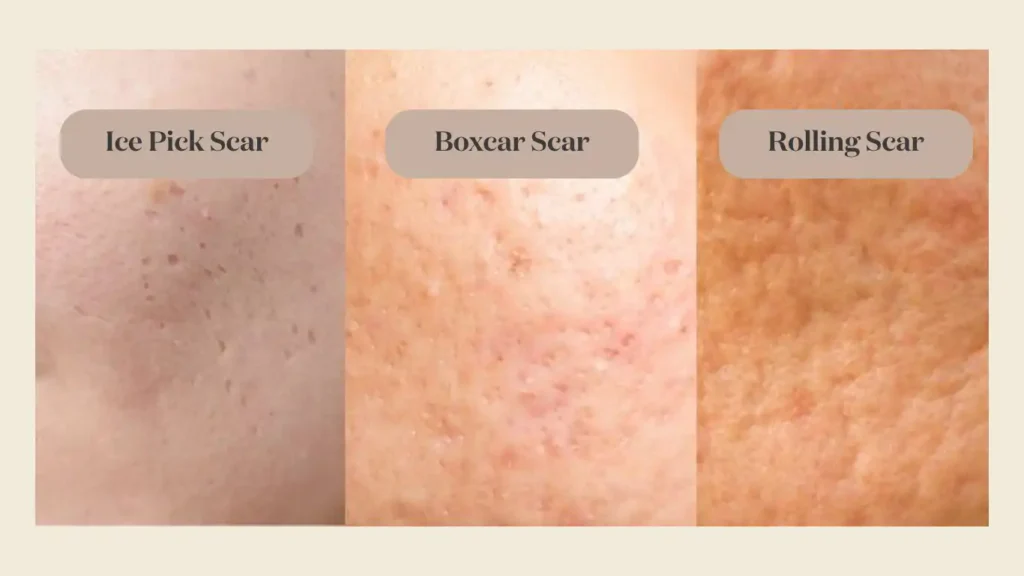
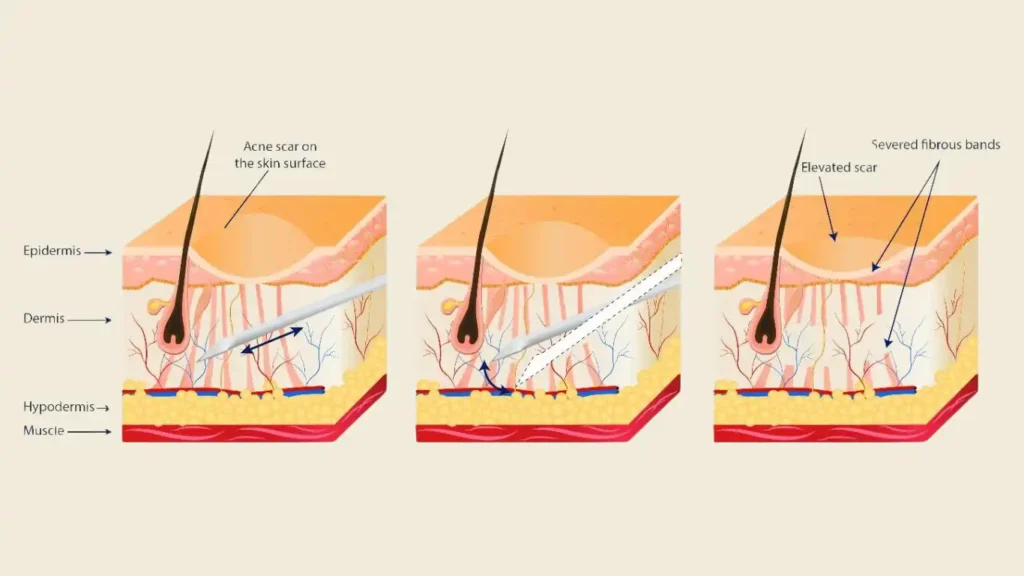
Rolling scars develop when fibrous bands form between the skin and deeper tissue during healing. These bands anchor the surface downward, creating a wavy or sunken appearance that cannot be corrected by lasers alone.
Subcision is a minor procedural technique that mechanically releases these fibrous strands beneath the skin.
By freeing the tethered tissue:
This step is foundational for treating rolling scars before energy-based treatments are introduced.
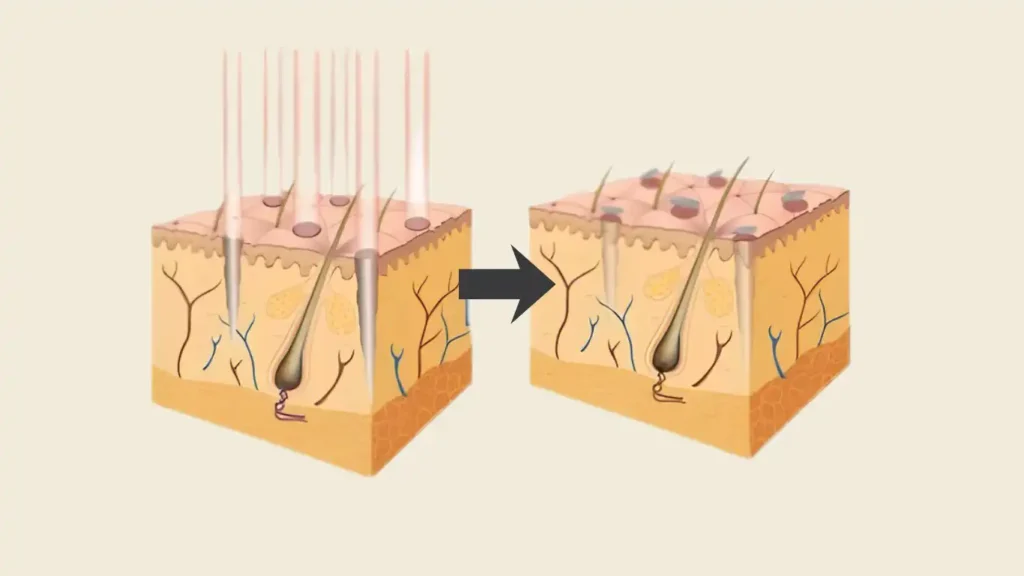
Fractional laser creates microscopic treatment zones that resurface damaged skin while stimulating collagen renewal.
It is particularly useful for:
Radiofrequency (RF) microneedling delivers heat into the dermis through insulated needles, targeting deeper layers than lasers alone.
This helps:
The combination of ablative resurfacing and dermal remodeling allows treatment across multiple scar depths.
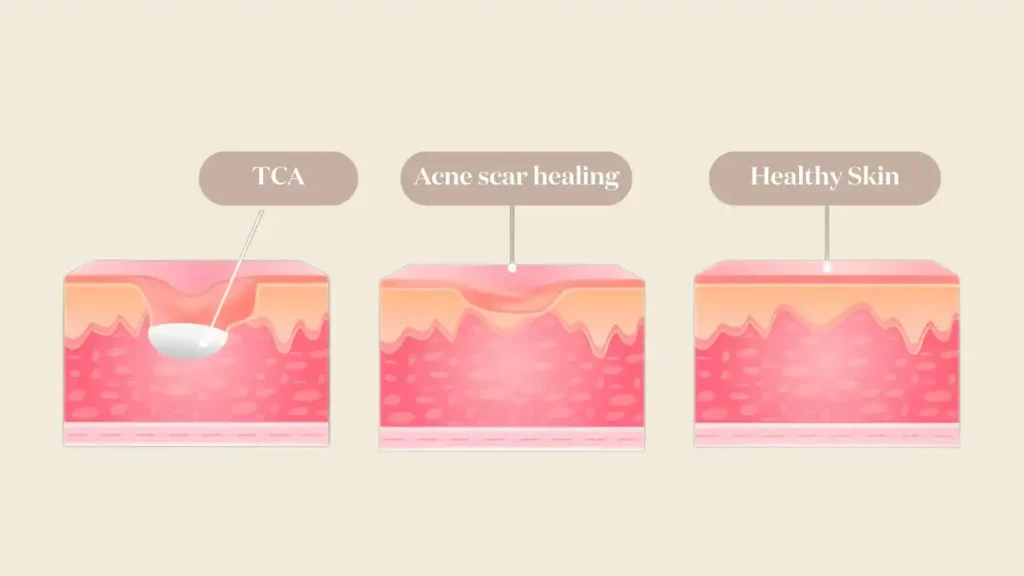
Ice-pick scars extend vertically into the dermis and respond poorly to general resurfacing.
TCA CROSS (Chemical Reconstruction Of Skin Scars) involves placing a precise concentration of trichloroacetic acid into the scar to trigger controlled reconstruction.
This induces:
Long-standing acne scars often involve true volume depletion. Bio-stimulatory injectables are used to support structural rebuilding rather than simply filling space.
These treatments work by activating fibroblasts to produce new collagen over time, leading to:
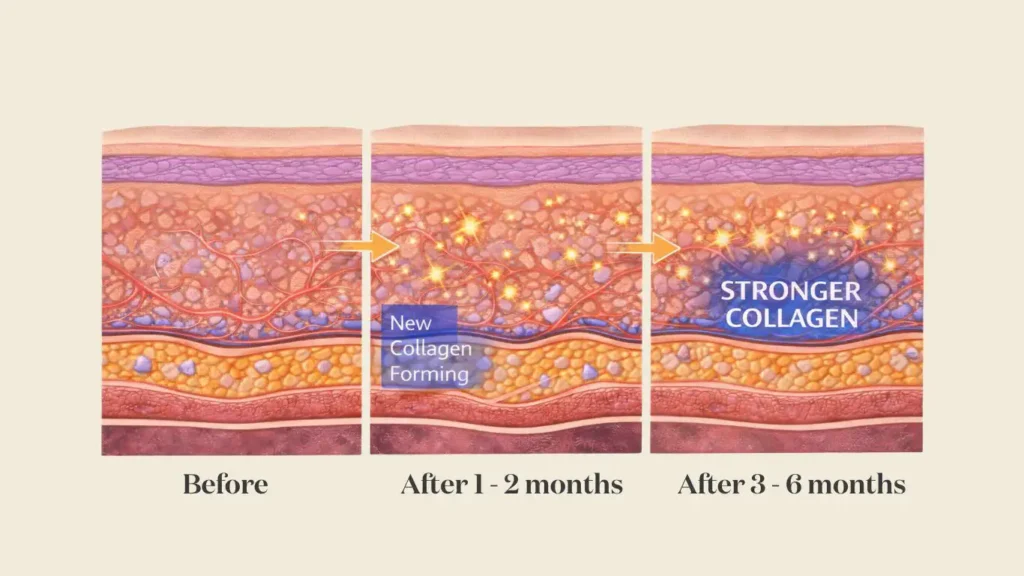
Each scar pattern is mapped to determine:
Multi-modality therapy is typically staged to optimise healing between sessions.
Treatment is performed over several visits, allowing gradual correction while minimising complications.
Sessions are spaced to allow collagen regeneration before the next modality is introduced.
Most patients require a series of treatments because scar remodeling is cumulative. Improvements are typically seen progressively as collagen rebuilds over months.
This approach may be considered for individuals who:
At VIDASKIN Medical Aesthetic Clinic, acne scar management is planned using a layered strategy tailored to scar morphology and skin response, with the aim of improving texture while maintaining skin stability—particularly important for Asian skin types.
There is no single “best” treatment. Effective management usually combines techniques such as subcision, energy-based devices, and collagen-stimulating therapies based on scar type.
Acne scars can often be improved significantly, but complete removal is uncommon. Treatment focuses on making scars less visible and improving overall skin texture.
Local anaesthesia is typically used to improve comfort. Mild soreness or bruising may occur for several days.
Downtime varies depending on treatment intensity but may involve redness, swelling, and peeling over several days to a week.
When performed carefully with appropriate concentrations and aftercare, it can be used in Asian skin, though careful technique is essential to reduce the risk of post-inflammatory hyperpigmentation.