- 501 Orchard Road, #04-08 Wheelock Place, Singapore 238880
- (65) 6235 4429
- hello@vidaskinclinic.com
- (65) 9830 0597
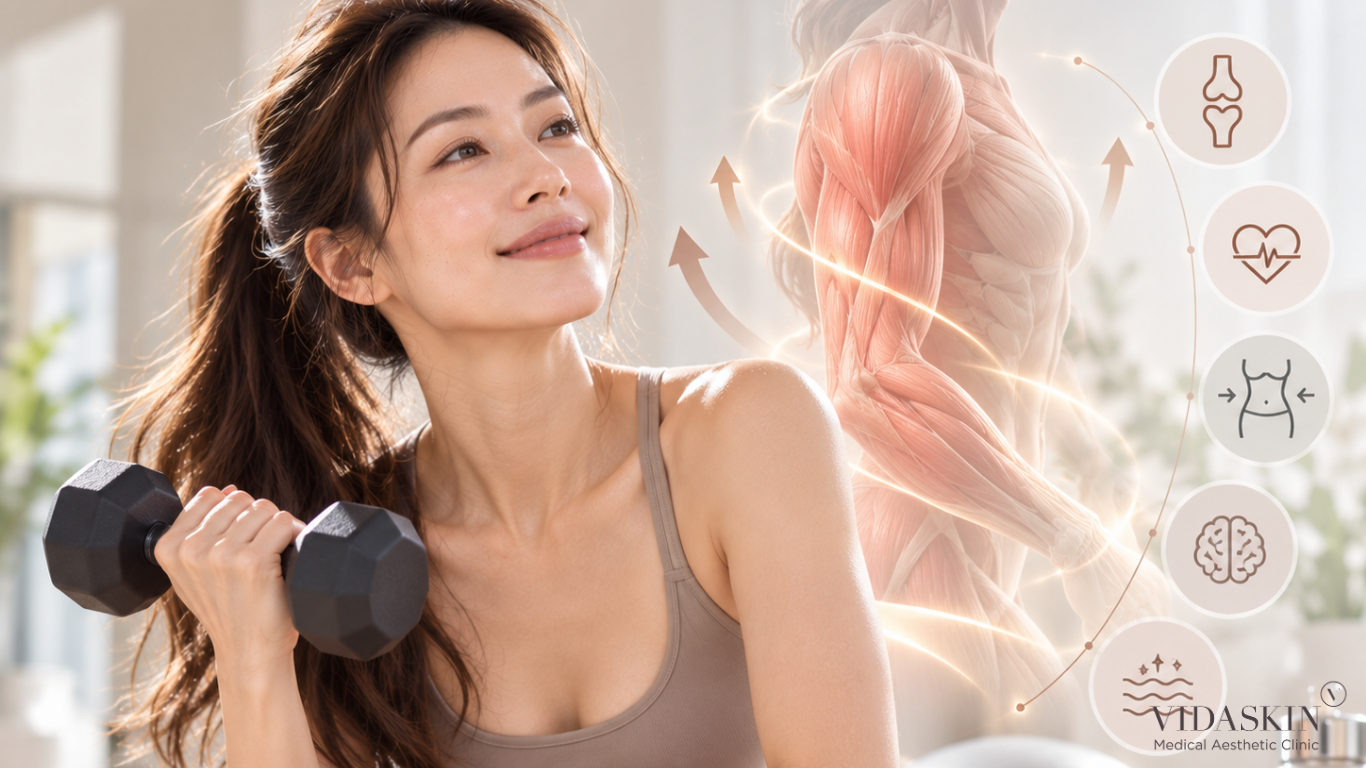
For most of my life, the conversation around our bodies has been about becoming smaller.
Lose weight.
Lose inches.
Reduce fat.
Get a smaller waist.
Be thinner.
Even in aesthetic medicine, body treatments have traditionally been marketed almost entirely around removing something.
Fat reduction. Cellulite reduction. Circumference reduction.
But the more I study healthy longevity, the more I think we have been focusing on only half the picture.
Because as we get older, one of the most important things we can preserve isn’t simply a low number on the weighing scale.
It is muscle.
And increasingly, when I look at body composition, I don’t just ask:
“How much fat do you have?”
I also want to know:
“How much muscle are you carrying—and how well does it function?”
Because muscle isn’t simply something that makes us look toned.
Skeletal muscle is a metabolically active organ that plays an important role in glucose metabolism, movement, physical function, and healthy ageing.
And unlike our obsession with becoming smaller, preserving muscle may help us remain capable.
This is probably where I would like to change the conversation first.
Someone can be thin and have relatively little muscle.
Someone else can weigh considerably more and be metabolically and physically healthier.
Weight alone tells us very little about body composition.
And BMI, while useful at a population level and in certain clinical contexts, doesn’t tell us whether that weight comes predominantly from fat, muscle, or other tissues.
This becomes increasingly important as we age.
Because there is a big difference between:
losing weight
and
losing fat while preserving muscle.
If the number on the scale falls because we have lost substantial lean tissue as well as fat, I don’t necessarily consider that an optimal outcome.
Particularly in midlife and beyond.
From adulthood onwards, skeletal muscle mass and function can gradually decline, with the rate becoming more clinically important later in life.
Eventually, some people develop sarcopenia.
Sarcopenia is not simply “being skinny” or “having less muscle”.
It is an age-associated muscle disorder characterised by loss of muscle strength, with reduced muscle quantity or quality contributing to the diagnosis and impaired physical performance indicating greater severity.
And this matters because muscle is fundamental to something I think longevity medicine sometimes makes unnecessarily complicated:
Can you continue to do the things you want to do?
Can you climb stairs?
Can you carry your luggage?
Can you get yourself off the floor?
Can you lift your grandchild?
Can you recover after an illness?
Can you maintain your balance?
Can you continue travelling?
Can you remain independent?
These may eventually become much more meaningful measures of ageing than whether you have wrinkles.
This is where muscle becomes particularly interesting metabolically.
After we eat carbohydrate and blood glucose rises, insulin helps move glucose from the circulation into tissues.
Skeletal muscle is a major site of insulin-stimulated glucose disposal.
Muscle therefore isn’t simply machinery that moves our skeleton.
It is deeply involved in our metabolic health.
Physical activity and muscle contraction can increase glucose uptake, and regular exercise improves insulin sensitivity.
This is one reason resistance exercise becomes interesting not simply as a way to look more toned, but as part of maintaining metabolic health.
When I look at muscle now, I increasingly see something closer to a metabolic reservoir.
Something worth protecting.
This is perhaps one of my favourite concepts.
Muscle isn’t biologically silent.
When skeletal muscle contracts, it can release signalling molecules commonly referred to as myokines.
These molecules participate in communication between muscle and other tissues and are being studied for their roles in metabolism, inflammation and whole-body physiology.
So exercise isn’t simply:
muscle contracts → muscle becomes bigger.
A contracting muscle is participating in a much broader biological conversation.
This is one reason I like describing muscle as an organ rather than simply tissue that makes our arms and legs look nice.
Muscle also doesn’t exist independently from bone.
They are mechanically and biologically connected.
Muscles generate forces across bones. Weight-bearing and resistance exercise provide mechanical loading that helps support musculoskeletal health.
And as we age, preserving both becomes increasingly important.
A fall when you are 25 and a fall when you are 80 can have very different consequences.
This is why healthy ageing isn’t simply about preventing wrinkles or even preventing disease.
It is also about maintaining enough:
strength + bone health + balance + coordination
to reduce the risk of falls and preserve function.
WHO specifically recommends muscle-strengthening activity for adults and, in older adults, additional multicomponent activity emphasising strength and functional balance to help preserve functional capacity and prevent falls.
This is preventive medicine in its least glamorous form.
But potentially one of its most important.
We hear an enormous amount about osteoporosis.
Far fewer people talk about sarcopenia.
Yet the two can become intimately connected as we age.
If muscle strength declines, physical function declines.
When physical function declines, people tend to move less.
Less activity can further contribute to declining strength and musculoskeletal health.
Balance may deteriorate.
Falls become more consequential.
And eventually, something that began as a gradual decline in physical capacity can affect independence.
This is what I find fascinating about longevity medicine.
The objective isn’t necessarily:
How do we make a 70-year-old biologically 35?
A much more useful question might be:
How do we help a 70-year-old remain strong enough to live like herself?
I think this conversation is particularly important for women.
We spend decades being taught to watch our weight.
Then we enter our 40s and 50s and our physiology begins changing.
Perimenopause and menopause can coincide with changes in body composition, fat distribution, and musculoskeletal health.
At exactly the stage of life when maintaining muscle becomes increasingly important, many women are still focused primarily on:
“How can I lose another five kilograms?”
I increasingly want to change that question to:
“How can we improve your body composition while preserving—or ideally building—your strength and muscle?”
That is a very different objective.
And I think it is a healthier one.
We are now living through an extraordinary period in metabolic medicine.
GLP-1-based medications have transformed the treatment of obesity and can produce substantial weight loss in appropriately selected patients.
That is an important medical advance.
But weight loss is not composed exclusively of fat.
When people lose significant amounts of body weight—whether through calorie restriction, bariatric surgery, or pharmacological treatment—some loss of lean mass can also occur.
This does not mean that GLP-1 medications are bad or that people should avoid medically appropriate weight loss.
It means that our goal shouldn’t simply be:
“Lose as much weight as possible.”
It should increasingly become:
reduce excess adiposity while protecting nutrition, protein intake, physical activity, strength and lean tissue as much as reasonably possible.
Because again:
smaller isn’t automatically healthier.
Imagine two women.
Both weigh 55 kg.
One has relatively high skeletal muscle mass, exercises regularly and is physically strong.
The other has substantially less muscle and a higher proportion of body fat.
The weighing scale says:
55 kg.
The same.
Physiologically, they are not necessarily the same at all.
This is why body composition becomes much more interesting to me than body weight alone.
And it is why I think aesthetic medicine needs to evolve beyond simply measuring kilograms and centimetres.
This is where I think we need to be extremely clear.
At VIDASKIN, we use Emsculpt NEO, which combines high-intensity focused electromagnetic energy—HIFEM—with radiofrequency.
The electromagnetic field induces intense muscle contractions while radiofrequency simultaneously heats the tissues.
Clinical studies using imaging such as MRI have reported increases in measured muscle thickness alongside reductions in subcutaneous fat following treatment.
That makes it an interesting technology for body contouring.
But here is the part I think is much more important:
I don’t want anybody reading this article to think:
“Great. I can lie down for 30 minutes instead of strength training.”
No.
Exercise gives us things that no body-contouring device can reproduce completely.
Resistance training involves movement patterns, coordination, progressive loading, tendon adaptation, bone loading, cardiorespiratory interactions, and whole-body physiological responses.
Emsculpt NEO cannot replace that.
And I don’t think we should market it as though it can.
Because medicine doesn’t always have to be either/or.
I think of Emsculpt NEO as an adjunct.
There may be people who are already exercising and want additional body-contouring or muscle-toning support.
There may be people restarting physical activity after a period of deconditioning.
There may be people who find it difficult to activate certain muscle groups effectively.
And there may simply be patients whose aesthetic objective is not to become thinner, but to look stronger and more defined.
That is an aesthetic goal I feel increasingly comfortable supporting.
Because it moves our conversation from:
“How much can we remove?”
towards:
“What can we preserve and build?”
This is another place where I think we should resist marketing language.
There are published studies reporting increases in muscle thickness after simultaneous HIFEM and radiofrequency treatment.
For example, one MRI-based multicentre study of 41 participants receiving abdominal treatment reported an increase in measured muscle thickness and reduction in subcutaneous fat at follow-up.
A later systematic review evaluating HIFEM-based body contouring found increases in measured abdominal muscle thickness across imaging studies.
But the evidence base is still relatively small, particularly for Emsculpt NEO specifically.
So I would not tell a patient:
“Emsculpt NEO prevents sarcopenia.”
We do not have the evidence to make that claim.
I would not say:
“Emsculpt NEO improves longevity.”
We do not have evidence for that either.
And I certainly would not claim:
“Four sessions are equivalent to months in the gym.”
What we can say is that HIFEM + RF has clinical evidence supporting local changes in muscle thickness and body contouring in treated areas.
That is useful.
But it is not the same outcome as demonstrating improved long-term strength, mobility, metabolic health, fall prevention or healthy lifespan.
That distinction matters enormously to me.
This is perhaps the most important scientific caveat in this article.
A scan can show that a muscle has become thicker.
But longevity medicine isn’t ultimately interested in the prettiest MRI.
We care about function.
Can you lift more?
Can you walk faster?
Is your grip stronger?
Can you stand from a chair easily?
Has your balance improved?
Can you climb stairs?
Can you continue doing these things at 70, 80 and 90?
These are very different endpoints from an aesthetic measurement of abdominal muscle thickness.
So while I find technologies that stimulate muscle genuinely interesting, I don’t want to confuse a body-contouring endpoint with a longevity endpoint.
That would be scientifically dishonest.
Exercise.
Every time.
I run an aesthetic clinic, and I am still telling you that.
Because the objective of healthy longevity is not to sell the most sophisticated intervention.
It is to choose the intervention that gives the patient the greatest meaningful benefit.
For adults, current physical-activity guidelines recommend regular aerobic activity alongside muscle-strengthening activities involving the major muscle groups on at least two days each week.
And as we get older, strength, balance and functional movement become even more important.
So if you have limited time and money:
Go lift weights.
Walk.
Climb stairs.
Carry things.
Move your body.
Eat enough protein.
And keep doing those things consistently.
Unfortunately, there is still no machine that replaces being physically active.
This doesn’t mean aesthetic technology has no place.
I actually think the opposite.
What excites me is when technology supports a healthier objective.
Historically, body aesthetics has been dominated by:
less fat.
smaller waist.
smaller thighs.
lower weight.
I would like the next era to include:
more muscle.
more strength.
better body composition.
better function.
Emsculpt NEO sits somewhere within that evolving conversation for me.
Not as a longevity treatment.
Not as an alternative to exercise.
But as an aesthetic technology that allows us to think about building, rather than always removing.
This is where longevity medicine has really changed my thinking.
When I was younger, ageing was mostly something I associated with appearance.
Lines.
Pigmentation.
Sagging.
Volume loss.
I still care about those things. It is my field, and there is absolutely nothing wrong with wanting to look good.
But increasingly, when I imagine ageing well, I think about something else.
I want to be able to travel.
Carry my own suitcase.
Walk around a city all day.
Get up from the floor without thinking about it.
Climb stairs.
Maintain my balance.
Live independently.
And continue doing the things that make my life feel like mine.
Suddenly, muscle becomes incredibly beautiful.
Perhaps this is where I would like our philosophy at VIDASKIN to evolve.
Body aesthetics should not simply be about taking things away.
Sometimes it should be about preserving what we will desperately wish we had more of later.
Muscle.
Strength.
Function.
Bone.
Mobility.
Independence.
There is nothing wrong with wanting a flatter abdomen or more defined body contour.
But if I can help change the conversation from:
“How can I become smaller?”
to:
“How can I become stronger?”
I think that is worthwhile.
Because perhaps the body we should aspire to have at 50 isn’t the smallest body we can achieve.
It is the body most capable of carrying us through the next 30, 40 or 50 years.
And that, to me, is what healthy longevity is really about.
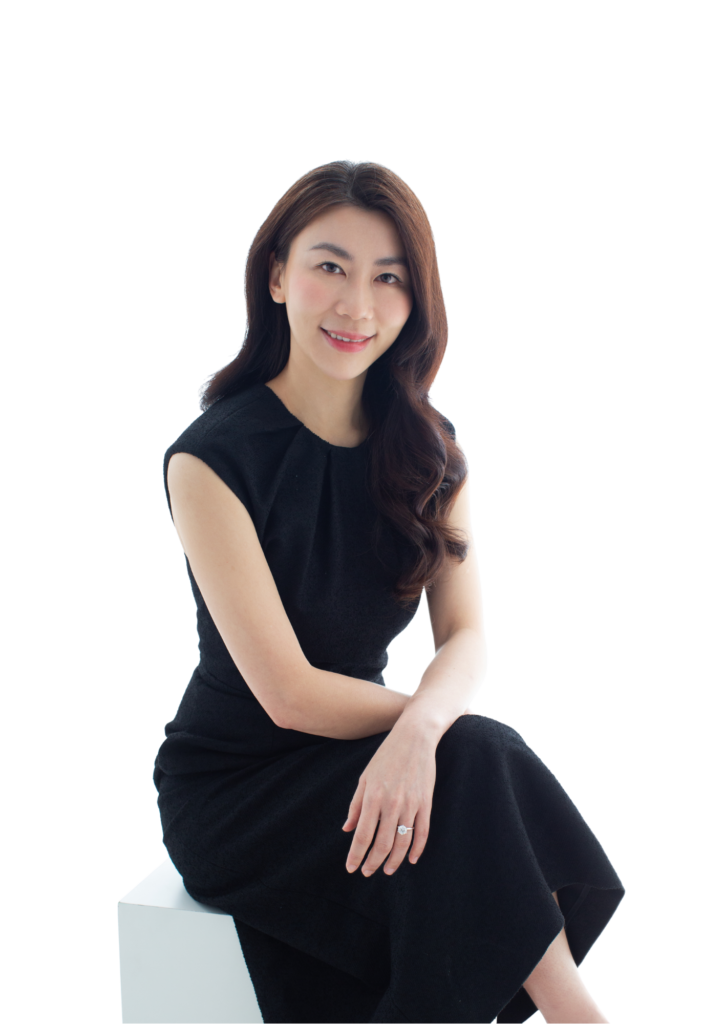
Founded in 2015, Dr Vicki has grown with the clinic, to become one of the leading aesthetic clinicians in Singapore. She is an appointed key opinion leader and trains other aesthetic doctors on how to best use prestigious brands and treatments.
