- 501 Orchard Road, #04-08 Wheelock Place, Singapore 238880
- (65) 6235 4429
- hello@vidaskinclinic.com
- (65) 9830 0597
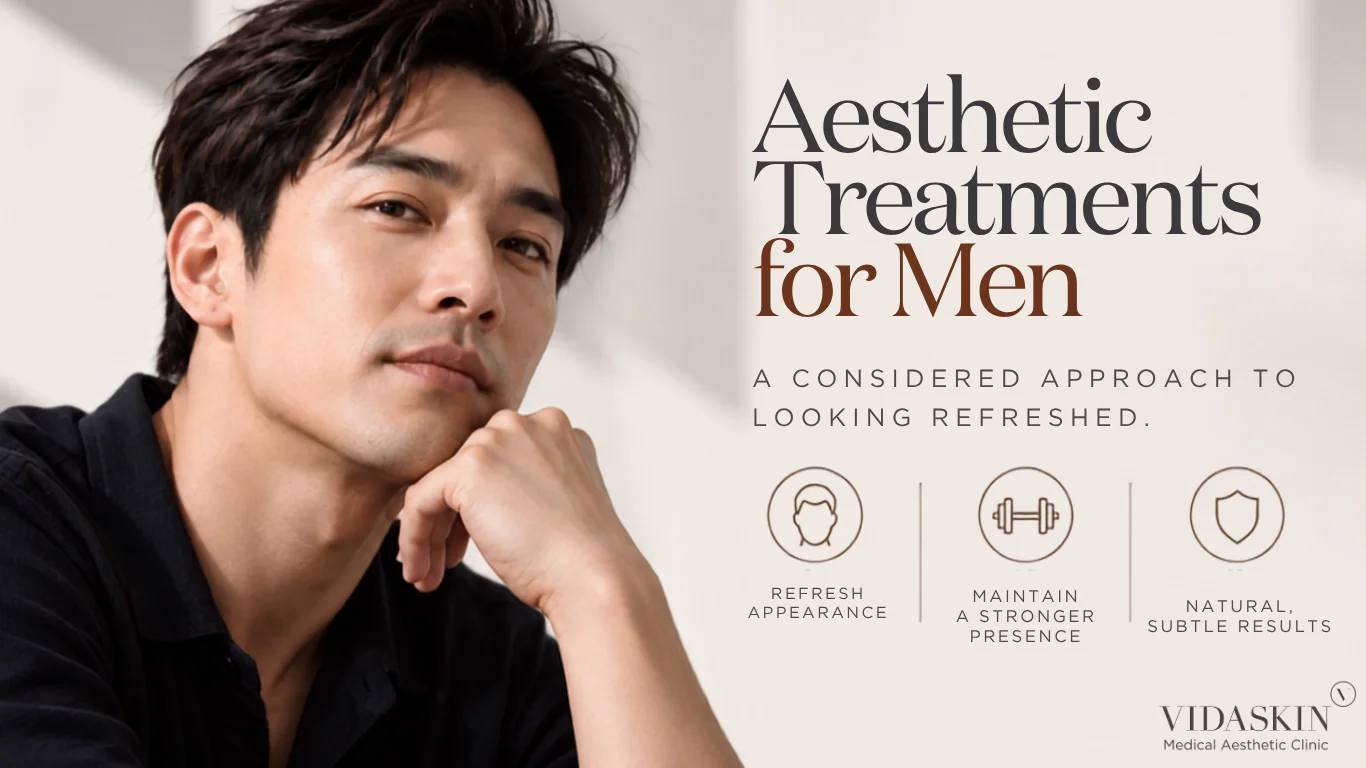
You may be comfortable with the way you look and still want help with a particular concern. Perhaps acne marks remain long after the breakouts have settled, or a frown makes you look tense when you feel relaxed. The change you want may be a subtle one.
For men considering aesthetic treatment, the first question is often whether an improvement can look like a natural extension of their own features. A thoughtful plan begins by understanding what you want to change and what you want to preserve. From there, treatment can be directed towards a clear, realistic goal.
Start with the concern you notice most. You don’t need to arrive with the name of a treatment or know whether you need a laser, an injectable, or a change in skincare. Describing what bothers you gives the doctor a more useful starting point than choosing a procedure from a menu.
Try to be specific about the result you would value. You might want the marks on your cheeks to be less noticeable, or your forehead to look less tense while keeping its movement. It is equally helpful to say you don’t want more facial volume or that you can only accommodate a short recovery period.

When new breakouts keep appearing, controlling the acne is the first priority. Treatment may involve products applied to the skin or oral medication, depending on the severity and previous response. An occasional facial may improve how the skin feels, but recurring inflammatory acne usually needs a consistent medical plan.[1]
Once a spot settles, a flat dark mark can remain without there being a permanent scar. These marks can improve with appropriate skincare and sun protection. An indentation involves a change in the skin’s structure and requires a different assessment.[2]
For indented scars, options such as selected resurfacing procedures or scar release may be considered according to the scar pattern. Improvement is usually assessed over a course of treatment, with time between sessions for healing. The aim is to make the texture less conspicuous; complete removal of every scar is rarely a realistic goal.[3]
Some lines become most visible when you frown, raise your eyebrows or smile. Where muscle activity is the main contributor, treatment that temporarily reduces selected muscle contractions may soften their appearance. The treatment plan should account for how your face moves, including the amount of expression you want to retain.[4]
A smooth forehead is not necessarily everyone’s preferred result. If the concern is a persistent frown, the discussion can stay focused on that area. Being clear about the desired change helps avoid a broader treatment plan than you actually want.
The skin’s surface deserves attention before moving to more involved procedures. A gentle cleanser, suitable moisturiser and daily broad-spectrum sunscreen form a useful foundation. Products should suit your skin type; a range labelled for men is not automatically better for sensitive or acne-prone skin.[5]
If uneven tone or texture remains a concern, your doctor can assess whether a targeted topical treatment or a procedure is appropriate. Selected peels can improve superficial irregularities, but their strength and recovery requirements vary. Redness, peeling and pigment changes are possible, so suitability matters more than how intensive a treatment sounds.[6]
A change in facial outline needs an assessment of the underlying structure. Where reduced volume is contributing, carefully selected filler treatment may improve contour. The amount and placement should follow the existing anatomy and the intended change, with conservative treatment helping to avoid unnecessary fullness.[7]
If mild skin laxity is the main concern, an appropriate ultrasound or radiofrequency treatment may offer gradual, modest tightening. These treatments have limits, particularly when there is substantial loose skin. An assessment helps establish whether the likely improvement is enough to meet your expectations.[8]
Natural-looking results begin with a shared understanding of what should remain familiar. The doctor needs to consider your face as a whole, including how a proposed change will sit alongside features you already like. A broader jaw or fuller cheek is not an automatic goal simply because the patient is male.
A useful consultation also makes room for restraint. Treating one concern, reviewing the result, and deciding whether anything further would be worthwhile can make the process easier to judge. You should be able to explain, in your own words, what each proposed treatment is intended to achieve.
Repeated irritation after shaving is worth mentioning, especially if it has been treated as acne without much improvement. Shaving technique and product choice can contribute to discomfort. Avoiding an excessively close shave and shaving in the direction of hair growth may help reduce irritation.[5]
Tell your doctor where the skin tends to sting, how often you shave, and which products you use afterwards. These details can influence both daily care and the timing of a procedure. They also help distinguish a routine that needs adjusting from a skin problem that needs treatment.
Ask what your skin is likely to look and feel like afterwards, as well as when you can return to work. Being able to attend a meeting is a different consideration from feeling comfortable in close-up photographs. Your diary, exercise routine and any upcoming travel should be part of the planning discussion.
Recovery depends on the procedure. Injections can leave bruising or swelling, while resurfacing treatments may cause more visible redness or peeling. Ask how long these effects usually last, what aftercare is needed, and whether your plans leave a reasonable margin for recovery.[9][6]
The discussion should also cover less common but significant risks. Fillers, for example, can rarely obstruct a blood vessel and cause serious injury. Understanding the relevant risks and how concerns would be managed helps you make an informed decision about treatment.[9]

A worthwhile first treatment has a clear purpose and a result you can assess. Agree on the main priority, what degree of improvement is plausible and when it should be reviewed. Ask about the likely total cost, including any planned course of sessions, so the commitment is clear from the outset.
Review should return to the concern that brought you in. Has the skin become easier to manage? Are the marks less noticeable? Does your expression still feel familiar? These questions are more useful than assuming that every improvement needs to be followed by another procedure.
Dr Nick Wang’s approach at VIDASKIN emphasises careful assessment, clear communication and treatment that respects each patient’s individual features. For someone considering aesthetic care for the first time, that provides a considered starting point for discussing both the desired result and any reservations about treatment.[10]
If there is something about your skin or appearance you would like to understand better, book a consultation with Dr Nick Wang. Bring your questions, your current skincare routine and a sense of what you would like to improve. The first step is to establish what would make a meaningful difference for you.Suggested call-to-action link:
Yes. Depending on the concern, skincare, medical acne treatment, or selected procedures such as peels may be appropriate. Injections are one option within aesthetic medicine and do not need to be part of every plan.[1]
That depends on the concern and treatment. Acne scars often need several sessions, while other procedures may begin with one treatment followed by review. Ask how progress will be assessed before committing to a course.[3]

