- 501 Orchard Road, #04-08 Wheelock Place, Singapore 238880
- (65) 6235 4429
- hello@vidaskinclinic.com
- (65) 9830 0597
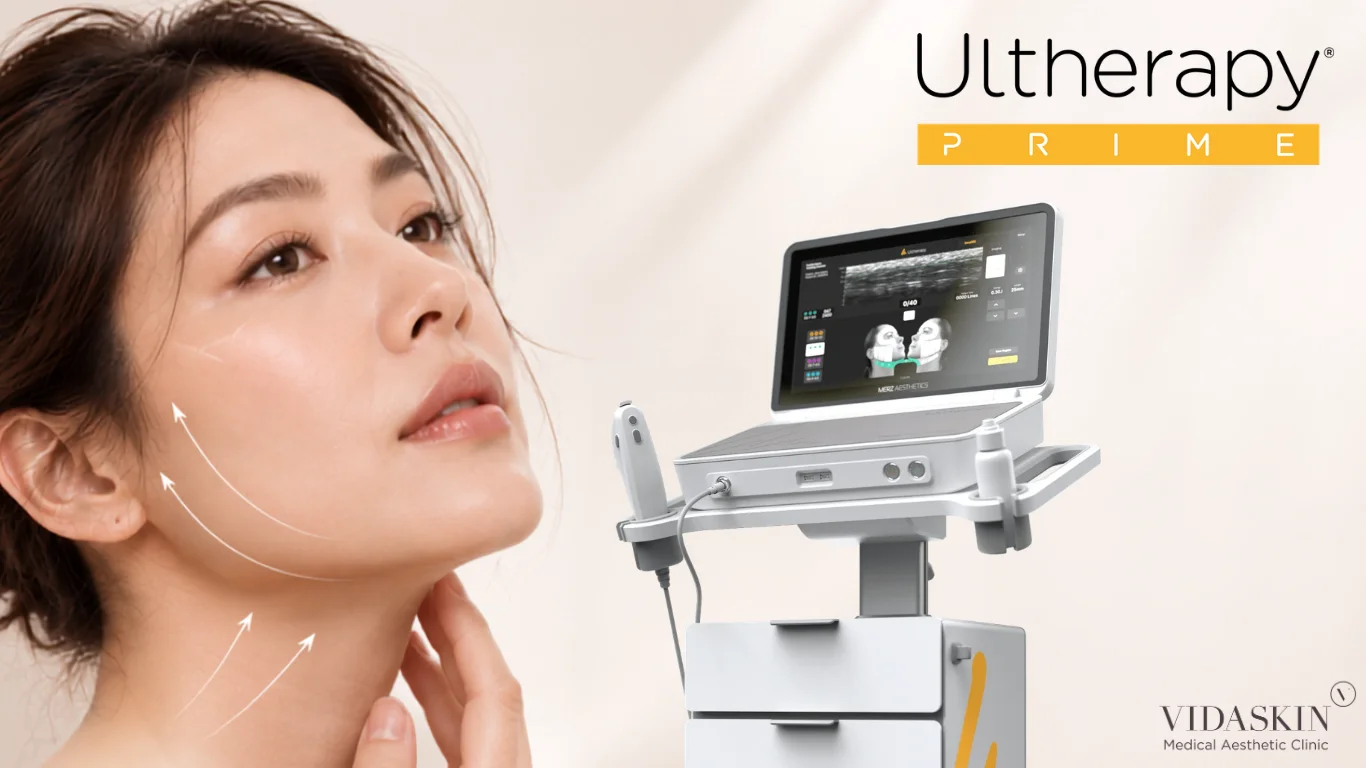
Ultherapy uses microfocused ultrasound to support skin tightening and modest lifting without surgery. During treatment, patients may notice brief episodes of heat, prickling, or tenderness as the energy is delivered beneath the skin. The intensity varies from person to person, and some areas may feel more sensitive than others.
Knowing what to expect can make the experience feel more familiar. Careful planning, suitable pain relief and a pace that allows for feedback all help support comfort. Published clinical guidance recognises these measures as an important part of treatment with microfocused ultrasound with visualisation.[1]

Microfocused ultrasound concentrates energy at selected depths beneath the skin, creating small, controlled areas of heating. This stimulates a tissue response that supports collagen remodelling over time. The brief heat associated with energy delivery contributes to the sensation felt during treatment.[2]
Patients may describe a deep warmth, a prickle, or a short stinging sensation as each treatment line is delivered. Some find this mild; others find certain areas more uncomfortable. The sensation alone does not confirm correct treatment depth or predict the eventual result.[8]
Ultherapy delivers energy in individual lines. Each produces a brief sensation, followed by a pause as the transducer moves to the next position.
The pauses can make the session easier to manage, although sensitivity may build as treatment progresses. Your doctor can adjust the pace and allow additional breaks when needed. Clear explanations beforehand can also help reduce uncertainty about the experience.[1]
The same treatment can feel different as it moves across the face. Tissue thickness, proximity to bone, and local nerve anatomy all contribute to these variations.
Ultherapy transducers deliver energy at defined depths, commonly 4.5 mm, 3.0 mm, and 1.5 mm. Each may produce a different sensation. A deeper setting is not necessarily more painful: the treatment area, energy level, and individual anatomy also influence what you feel.
A treatment plan may use more than one depth, so sensations can change within the same session. The doctor selects the appropriate transducers and settings according to the area being treated, tissue characteristics, and the intended outcome.[3]
Areas close to the jawbone or brow may feel more sensitive because there is less soft tissue between the skin and underlying structures. The cheeks may be easier to tolerate for some patients, but sensitivity varies, and there is no fixed pattern that applies to everyone.
Your doctor can explain when treatment is approaching a potentially sensitive area. This allows you to prepare, ask for a pause, or discuss any change in sensation.
Sensation may be more pronounced where soft tissue is thin over bone. Local sensory nerve anatomy also influences how neighbouring areas respond to treatment.
Ultrasound visualisation helps the doctor assess tissue layers and confirm contact between the transducer and skin before delivering energy. Combined with anatomical knowledge, this supports appropriate targeting and helps avoid unnecessary discomfort. Imaging is a useful safeguard, although it cannot eliminate all treatment risks.[4]
The updated platform is designed to support imaging and treatment efficiency. These refinements may make the session easier to navigate, but the experience still depends on the areas treated, the settings selected, and the comfort measures used.
A newer platform does not guarantee a pain-free session. If you have had Ultherapy before, tell your doctor which areas felt difficult and what helped. That information is valuable when planning your next treatment.
A more efficient workflow may reduce the time spent in treatment. However, a shorter appointment is only helpful when there is still enough time for careful assessment, accurate placement, and breaks where needed.
Coverage also needs to be planned carefully. The doctor considers line placement, spacing and energy delivery across each area, while checking how you are tolerating the treatment. A clear plan helps maintain a consistent approach while leaving room to respond to changes in sensitivity.

Comfort begins before the first treatment line. A personalised plan considers your medical history, previous treatment experience and the extent of the areas being treated, with time to discuss any concerns.
Topical anaesthetic may form part of the comfort plan, depending on the treatment area and the doctor’s approach. When used, the product needs an appropriate application time, determined by its instructions and the doctor’s advice.
Numbing cream mainly acts near the skin surface, so its benefit for the deeper sensations of Ultherapy may be limited. It should not be expected to remove all discomfort. Your doctor can explain whether it is likely to help and whether other measures are appropriate.[1]
Oral pain relief may be considered for some patients, including those having larger areas treated or those who found a previous session uncomfortable. The choice depends on your medical history, regular medicines and allergies, as well as the planned treatment.
Discuss pain relief before your appointment so that the timing and any precautions can be explained. Take only the medicines advised by your treating doctor, and mention any painkillers or supplements you already use. Pain management should be tailored to the individual.[5]
Energy settings are selected with the treatment area, tissue thickness, and intended effect in mind. Your feedback adds useful information throughout the session, allowing the doctor to reconsider settings or pacing where appropriate.
Consensus guidance supports tailoring microfocused ultrasound to the patient.[6] Ultrasound findings, anatomical assessment, and your feedback guide suitable energy delivery, with attention to safety and comfort.
You should feel comfortable asking for a break. Tell your doctor if a sensation becomes difficult to tolerate, changes suddenly, or feels unusually sharp.
At VIDASKIN, patients are encouraged to share how they are feeling throughout treatment. This helps the doctor respond promptly and adjust the approach where needed, so comfort remains part of the clinical discussion from beginning to end.
Pacing can make a meaningful difference to the treatment experience. A well-planned appointment allows time to prepare each area, check the ultrasound image, and respond to patient feedback without feeling hurried.
Delivering lines in rapid succession may leave too little time to recover between sensations. Correct contact between the transducer and skin, careful line placement, and regular comfort checks also matter. These details support both treatment accuracy and a more manageable experience.
Before treatment, it is reasonable to ask who will perform the procedure and how comfort will be monitored. Understanding the plan can help you feel more at ease and gives you a clear opportunity to discuss any previous difficulties.
Lowering the energy can be appropriate in some circumstances, but the setting needs to remain suitable for the tissue and the treatment objective. This is a clinical decision made alongside other comfort measures.
The amount and distribution of energy influence the tissue response, but pain is not a reliable measure of effectiveness. A comfortable session can still be effective, and a painful one does not necessarily produce a better result. Assessment, targeting, and an appropriate treatment plan are more useful guides.[2][6]
If the treatment remains difficult to tolerate despite adjustments and suitable pain relief, the doctor can pause and review the plan with you. Depending on your concerns and preferences, this may involve changing the approach, stopping the session or discussing another treatment.

Treated areas may feel tender when touched, particularly around the jawline and cheekbones. Mild swelling, redness or occasional bruising can also occur. The degree of visible change varies, and some patients notice very little.[4]
Clinical studies have reported generally good tolerability when microfocused ultrasound with visualisation is used appropriately.[7] Your doctor will explain the expected effects for your treatment area and provide individual aftercare advice.
Temporary numbness, tingling or altered sensation can occur after treatment. These are recognised nerve-related effects and should be reported to the clinic, even when mild, so that the doctor can assess whether review is needed.[4]
Many cases settle over time, but persistent or worsening symptoms need assessment. When contacting the clinic, describe where the sensation has changed and when it began. New weakness or a change in facial movement should be reported promptly rather than left until a routine follow-up.
Redness usually settles within hours and swelling within days. Tenderness can last up to two weeks; altered sensation may take several weeks to resolve.[4]
Your symptoms should gradually improve. Follow the instructions given by your treating doctor, and contact the clinic if recovery differs from what was discussed or if anything causes concern.
Contact the clinic promptly if you notice any of the following, particularly if symptoms are severe, worsening, or different from those discussed before treatment:
You do not need to wait for a scheduled review to ask for advice. Early contact allows the doctor to assess the symptoms, decide whether an examination is needed and guide your care.
Discussing expected effects and possible complications before treatment is part of informed consent. The Singapore Medical Council emphasises the need for clear information about aesthetic procedures, including their risks and limitations, so patients can make an informed decision.[9]

A consultation gives you time to discuss how Ultherapy may feel, share previous experiences, and explore the comfort measures that could be appropriate for your treatment.
At VIDASKIN, Dr Nick Wang assesses your concerns, tissue characteristics, and treatment goals before recommending an approach. If Ultherapy is suitable, the discussion includes the treatment plan, comfort measures, and recovery. Where another option may better address your concerns, this can be explored with you.
To learn more or book a consultation, visit or contact us here today.
People can have very different experiences of the same procedure. Individual sensitivity, anxiety, treatment areas, energy settings, and pain relief can all contribute. A difficult experience is worth discussing with your doctor, but it does not predict how treatment will feel for you.
Most patients can return to work and usual activities after treatment. Mild redness, swelling, tenderness, or occasional bruising may occur, so allow some flexibility if appearance or comfort is important for your plans. For a special event, allow time for any visible effects to settle. Follow any individual advice given by your doctor.
Tell your doctor if an area feels particularly sensitive, if you need a pause or if the sensation changes suddenly. There is no need to tolerate difficult discomfort silently. Your feedback helps guide the pace and any appropriate adjustments.

