- 501 Orchard Road, #04-08 Wheelock Place, Singapore 238880
- (65) 6235 4429
- hello@vidaskinclinic.com
- (65) 9830 0597

Many people attribute upper eyelid heaviness solely to “excess eyelid skin,” but in reality, brow descent is often a major contributor. As structural support weakens over time, the brow gradually lowers, pushing tissue downward and creating the appearance of hooding—even when eyelid skin itself is not excessive.
Addressing brow position can therefore indirectly improve how the upper eyelid looks without treating the lid directly.

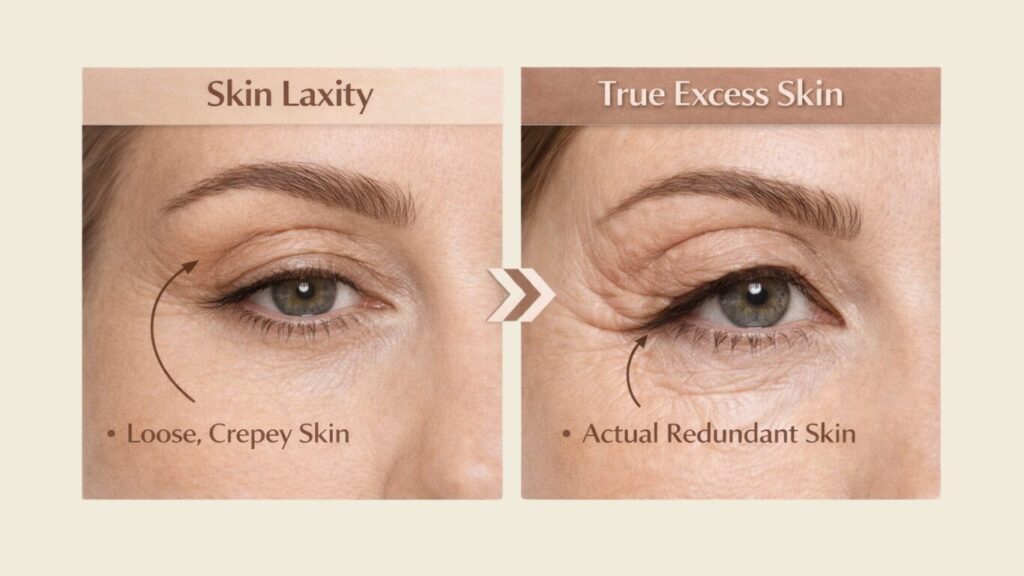
Not all heaviness is caused by redundant skin. In many individuals, the issue is reduced collagen elasticity, leading to tissue drape rather than true surplus tissue.
This distinction is important because laxity can often be improved with regenerative or tightening technologies, while true excess skin may require surgical correction.
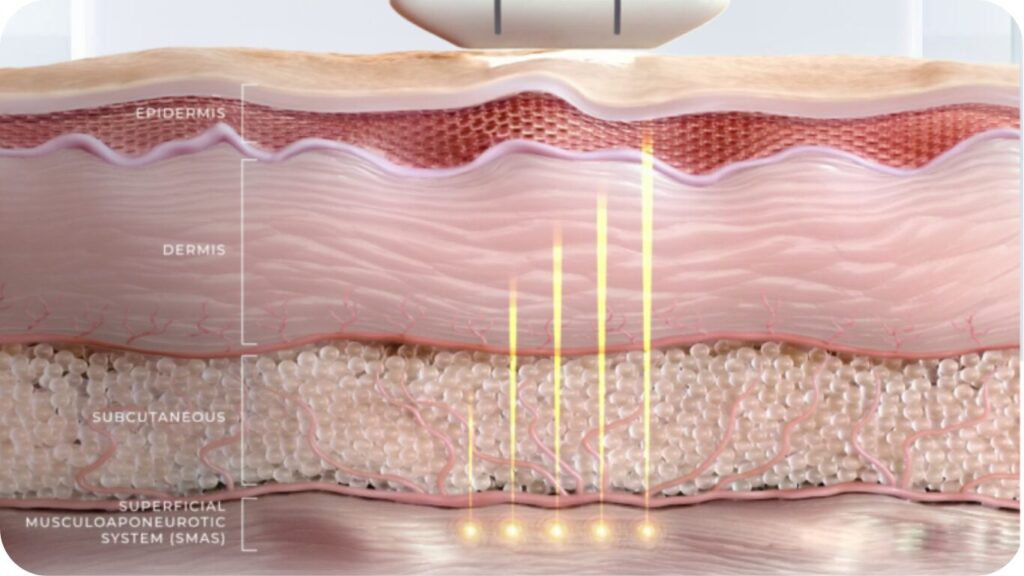
Micro-focused ultrasound delivers precise energy to deeper structural layers responsible for tissue support. By stimulating collagen at depth, it creates gradual lifting and strengthening of the brow framework.
Because brow position improves, patients may notice the eyelid appears more open—even though the eyelid itself was not directly treated.
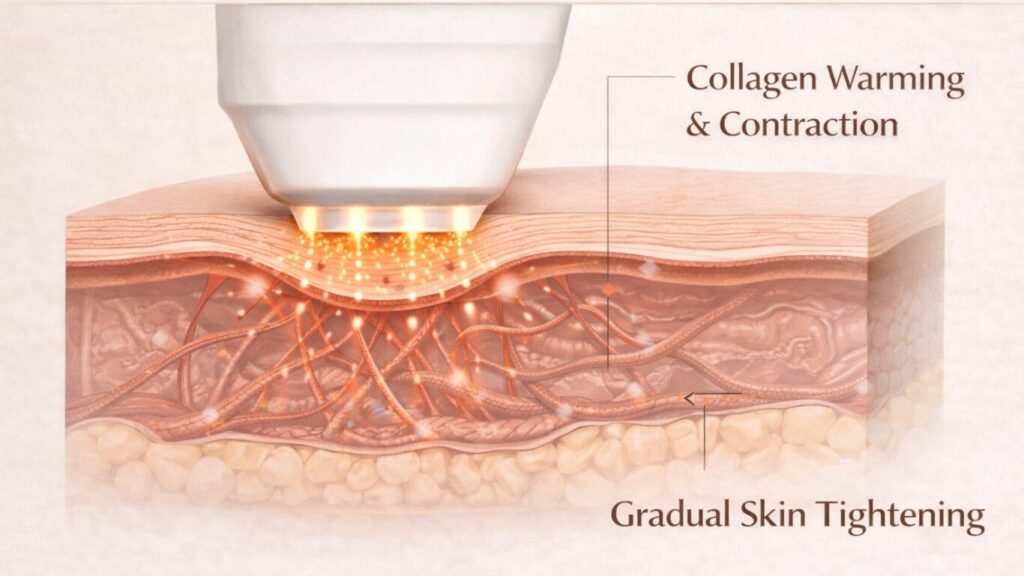
Specialised RF applicators are designed for thin periocular skin, allowing controlled dermal heating while protecting the surface.
RF energy induces immediate collagen fibre contraction followed by longer-term remodeling, leading to progressive tightening over several months.
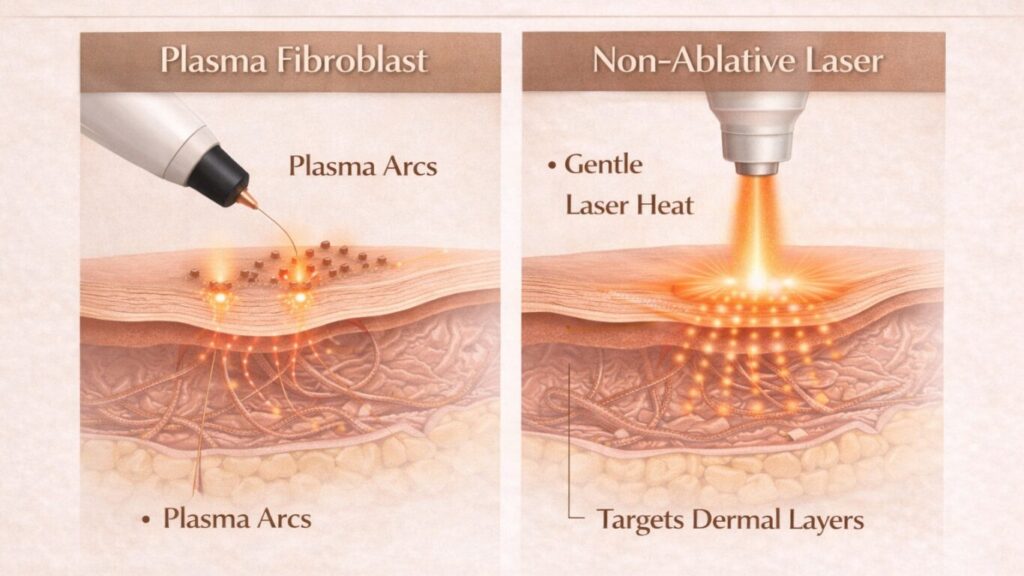
Plasma fibroblast devices create controlled micro-injuries on the skin surface, triggering a repair cascade that tightens and contracts tissue during healing.
Non-ablative lasers work beneath the surface without removing skin, using thermal stimulation to encourage collagen formation with typically less visible downtime.
Energy-based lifting improves structure, while polynucleotide-based treatments focus on skin quality—supporting hydration, elasticity, and regenerative repair.
Addressing pigmentation, translucency, and mild volume loss alongside lifting creates a more complete “eye-brightening” effect rather than treating laxity alone.
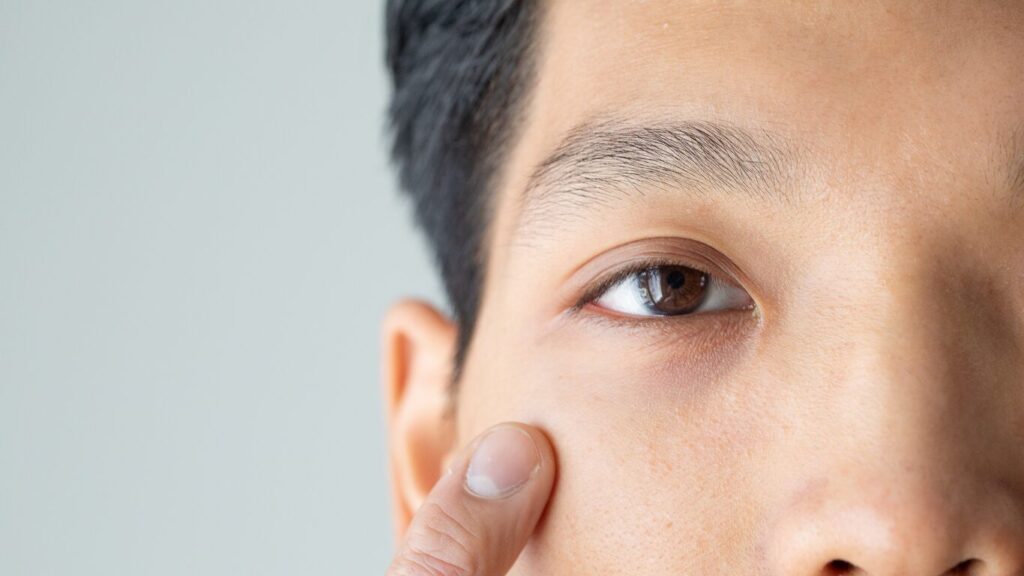
You may be suitable if you:
A detailed assessment is necessary to determine whether non-surgical methods can achieve your goals.
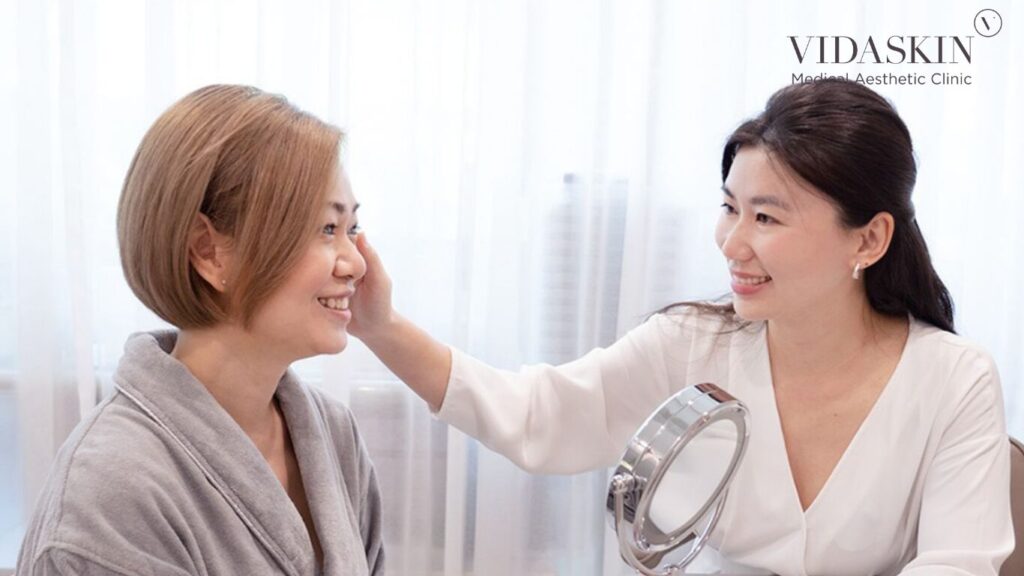
Evaluation includes brow position, eyelid thickness, skin elasticity, and overall facial balance to determine which modalities to combine.
Treatments are typically performed in stages, allowing collagen remodeling to occur between sessions for more natural progression.
Most technologies rely on biological regeneration, so improvements appear gradually over 2–4 months. Downtime varies depending on the modality used.
Because the periocular region is delicate, precise energy selection and conservative settings are essential to maintain safety and predictability.
Some individuals benefit from a single structural treatment followed by maintenance, while others may require a short series depending on tissue response.
At VIDSASKIN Medical Aesthetic Clinic, treatment planning for the eye area focuses on matching technologies to anatomical changes—addressing brow support, skin laxity, and dermal quality rather than relying on a single solution.
Is Ultherapy safe near the eyes?
When performed with appropriate protocols and eye-specific settings, micro-focused ultrasound treatments can be applied to the brow region to achieve indirect lifting while maintaining safety margins.
How long does RF eyelid tightening last?
Results vary depending on skin condition and maintenance, but collagen remodeling effects may continue for several months after treatment.
Which has a longer downtime, plasma Pen or laser?
Plasma fibroblast treatments typically involve more visible surface healing, while many non-ablative lasers allow quicker recovery.
When is blepharoplasty necessary?
Surgery may be considered when there is significant excess skin, pronounced fat prolapse, or when non-surgical methods are unlikely to achieve meaningful improvement.